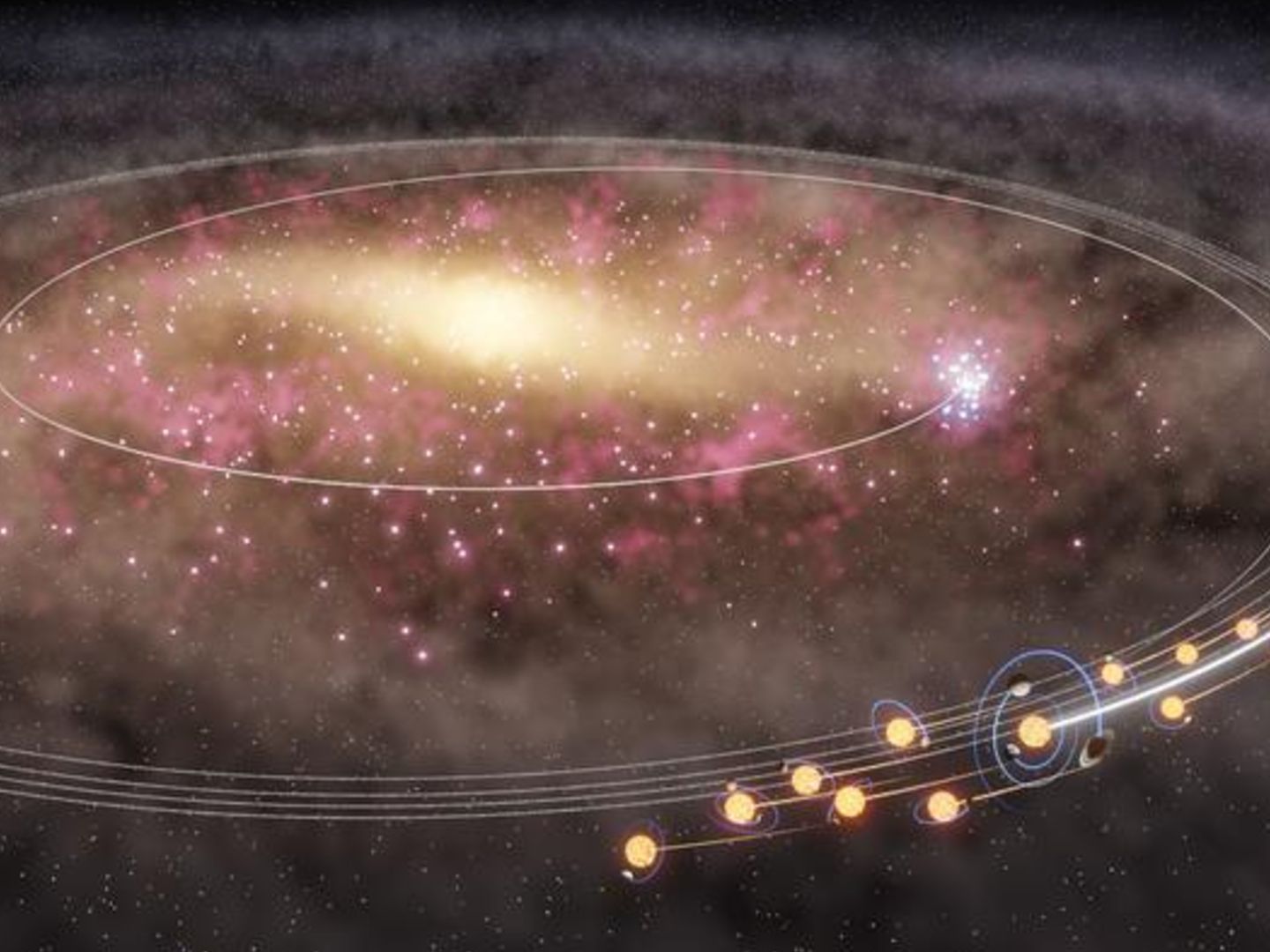
For decades, scientists have been puzzled by the existence of life in our solar system, with many theories attempting to explain its origin. However, a recent study published in the journal Nature suggests that the 'mass migration' of stars from the Milky Way's center could be the key to unlocking this mystery. This phenomenon, which occurred billions of years ago, is believed to have had a profound impact on the formation of planets, potentially giving rise to life.
The Mass Migration of Stars
The mass migration of stars refers to the movement of stars from the center of the Milky Way galaxy to the outer regions. This process, known as galactic migration, occurs when the gravitational forces within the galaxy cause stars to shift towards the periphery. Researchers believe that this migration had a significant impact on the formation of planets, potentially creating conditions that were conducive to life.
According to the study, the mass migration of stars resulted in a change in the chemical composition of the galaxy, leading to the formation of planets with diverse characteristics. This, in turn, created a variety of environments that were capable of supporting life. The researchers suggest that this explanation could change our understanding of the origins of life in the universe, providing a new perspective on the complex processes that shape the formation of planets.
The Implications of the Study
The implications of this study are far-reaching, with potential consequences for our understanding of the origins of life in the universe. If the mass migration of stars is indeed responsible for the existence of life in our solar system, it could have significant implications for the search for extraterrestrial life. The study's findings could also inform the development of new strategies for the search for life beyond Earth.
Furthermore, the study's results could have implications for our understanding of the formation of planets in the universe. By providing a new explanation for the origins of life, the researchers hope to shed light on the complex processes that shape the formation of planets and the emergence of life.
The Future of the Study
The study's findings are still in the early stages, and researchers are eager to continue exploring the implications of the mass migration of stars. Future studies will aim to build on the existing research, delving deeper into the mechanisms that led to the formation of planets and the emergence of life. The researchers are also planning to apply the study's findings to other galaxies, seeking to determine whether the mass migration of stars played a similar role in the formation of life elsewhere in the universe.
The study's lead author, Dr. Maria Rodriguez, expressed her enthusiasm for the study's potential impact, stating, "This discovery has the potential to revolutionize our understanding of the origins of life in the universe. We are eager to continue exploring the implications of the mass migration of stars and to apply the study's findings to other galaxies."
As the study continues to unfold, researchers are eager to uncover the secrets of the mass migration of stars and its role in the emergence of life in our solar system. The study's findings have the potential to change our understanding of the universe, providing new insights into the complex processes that shape the formation of planets and the emergence of life.
The study's results are a testament to the ongoing efforts of scientists to unravel the mysteries of the universe. As researchers continue to explore the implications of the mass migration of stars, we may uncover new and exciting discoveries that will shed light on the origins of life in the universe.
The study's findings have sparked renewed interest in the search for extraterrestrial life, with many scientists and experts hailing the discovery as a major breakthrough. The study's results are a reminder of the ongoing importance of space exploration and the potential for new discoveries to shape our understanding of the universe.
As the study continues to unfold, researchers are eager to apply the findings to other galaxies, seeking to determine whether the mass migration of stars played a similar role in the formation of life elsewhere in the universe. The study's implications are far-reaching, with potential consequences for our understanding of the origins of life in the universe and the search for extraterrestrial life.
Ultimately, the study's results highlight the importance of continued research into the mysteries of the universe. By exploring the complex processes that shape the formation of planets and the emergence of life, scientists may uncover new and exciting discoveries that will shape our understanding of the universe.
The study's findings are a testament to the ongoing efforts of scientists to unravel the mysteries of the universe. As researchers continue to explore the implications of the mass migration of stars, we may uncover new and exciting discoveries that will shed light on the origins of life in the universe.