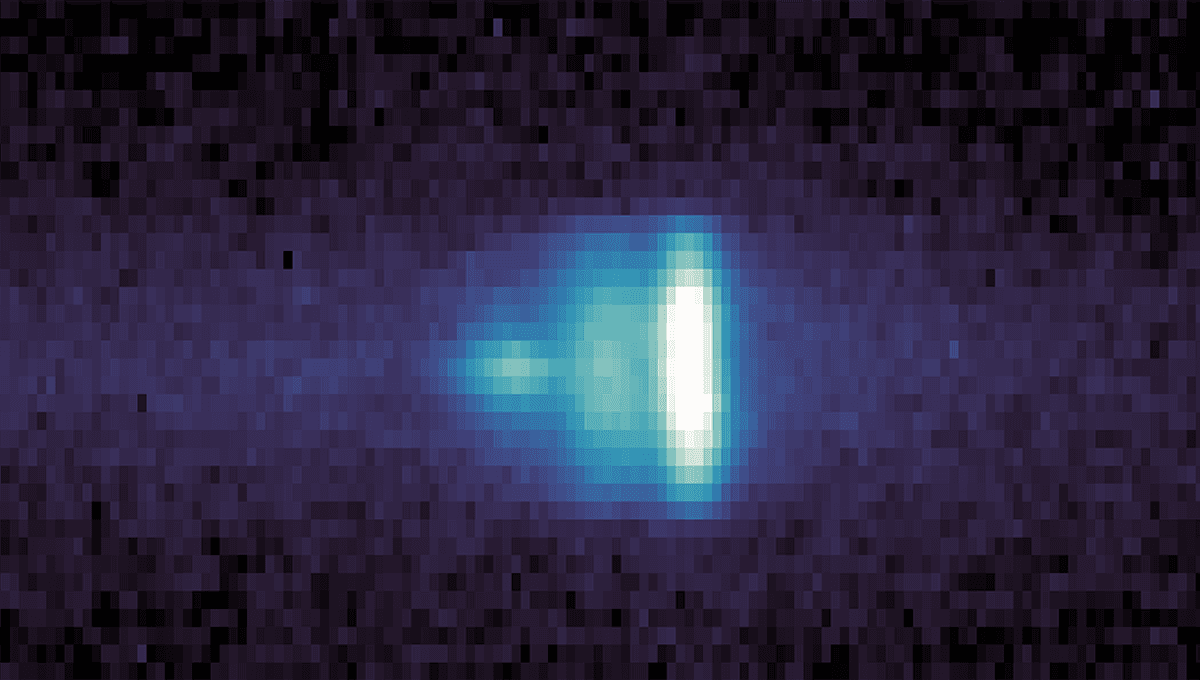
The study, led by Dr. Alan Fitzsimmons from Queen's University Belfast, used a combination of observations and simulations to recreate the possible origins of the comet. The researchers analyzed the comet's chemical composition and orbital characteristics, which suggested that it may have originated from a region of the galaxy with a different metallicity profile.
Low-Metallicity Star Connection
Low-metallicity stars are characterized by their lower abundance of heavy elements, which are essential for the formation of rocky planets. The researchers believe that the comet may have formed around one of these ancient stars, which would have been common in the early days of the galaxy. This would mean that the comet has been preserved in a frozen state for billions of years, carrying valuable information about the early solar system.
According to Dr. Fitzsimmons, the study's lead author, "The discovery of 3I/ATLAS has opened up new avenues of research into the origins of the solar system. By studying the comet's composition and orbital characteristics, we can gain insights into the early formation of the galaxy and the conditions that led to the creation of our own solar system."
Implications for Solar System Formation
The study's findings have significant implications for our understanding of the early formation of the solar system. The researchers suggest that the comet's low-metallicity origin may be linked to the formation of the solar system's rocky planets, including Earth. This theory would mean that the building blocks of our planet were formed in a region of the galaxy with a different chemical composition than the rest of the solar system.
The study's lead researcher also noted that the comet's discovery has sparked new interest in the study of interstellar comets. "The arrival of 3I/ATLAS marked a new era in the search for interstellar objects that may hold the secrets of the galaxy's early formation."
Future Research Directions
The study's findings have sparked new research directions in the fields of planetary science and astrophysics. The researchers are now planning to study the comet's composition in greater detail, using a variety of techniques including spectroscopy and mass spectrometry. This will help to shed more light on the comet's origins and the conditions that led to the formation of the solar system.
The study's lead researcher believes that further research will continue to reveal more secrets about the early formation of the solar system. "We are just beginning to scratch the surface of the mysteries that lie at the origins of our solar system. The discovery of 3I/ATLAS has given us a new tool to explore these questions."
The study's findings have significant implications for our understanding of the early formation of the solar system. The researchers suggest that the comet's low-metallicity origin may be linked to the formation of the solar system's rocky planets, including Earth.
The study's lead researcher noted that the discovery of the comet has sparked new interest in the study of interstellar comets. "The arrival of 3I/ATLAS marked a new era in the search for interstellar objects that may hold the secrets of the galaxy's early formation."
The study's findings have sparked new research directions in the fields of planetary science and astrophysics. The researchers are now planning to study the comet's composition in greater detail, using a variety of techniques including spectroscopy and mass spectrometry.
The study's lead researcher believes that further research will continue to reveal more secrets about the early formation of the solar system. "We are just beginning to scratch the surface of the mysteries that lie at the origins of our solar system."
The study's findings have significant implications for our understanding of the early formation of the solar system. The researchers suggest that the comet's low-metallicity origin may be linked to the formation of the solar system's rocky planets, including Earth.