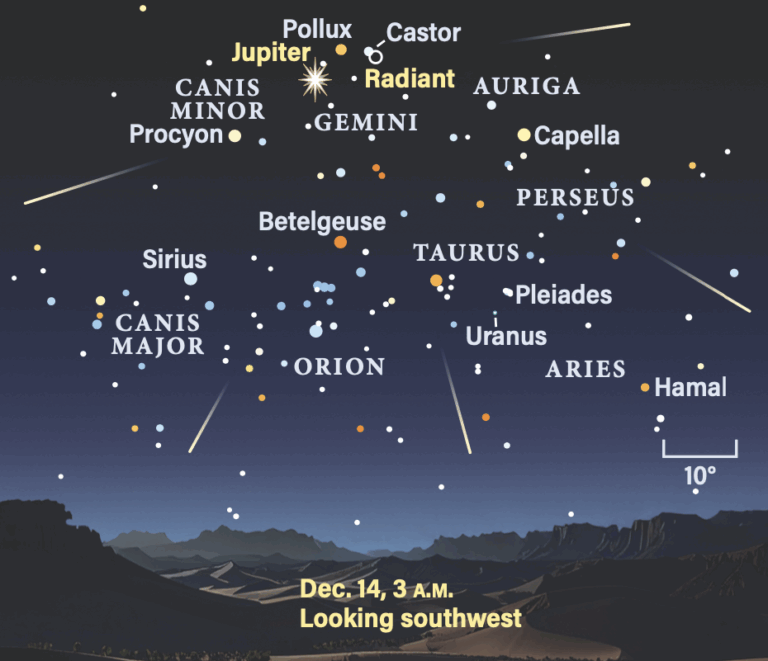
The Geminid meteor shower, a highly anticipated event in the astronomy community, has reached its peak on Sunday, December 14. This meteor shower is known for its high intensity and frequency of shooting stars, making it an ideal time for stargazers and astronomy enthusiasts to witness the phenomenon.
Peak Viewing Hours and Conditions
The best viewing hours for the Geminid meteor shower are between 10 pm and 3 am on December 14. During this time, the shower is expected to produce a high number of meteors, making it an ideal time for observers to witness the spectacle.
The weather conditions on Sunday, December 14, were mostly clear, with minimal cloud cover in many parts of the world. This allowed for optimal viewing conditions, making it easier for stargazers to spot the shooting stars.
Why the Geminid Meteor Shower is So Active
The Geminid meteor shower is caused by the Earth passing through the trail of debris left behind by the asteroid 3200 Phaethon. This asteroid is thought to be the source of the meteor shower, and its trail of debris is what produces the shooting stars.
The Geminid meteor shower is considered one of the most active meteor showers of the year because of the high concentration of debris in the asteroid's trail. This debris is made up of small rocks and particles that enter the Earth's atmosphere, burning up and producing the bright streaks of light that we see as shooting stars.
Tips for Viewing the Geminid Meteor Shower
For those who missed the peak viewing hours, there are still plenty of opportunities to witness the Geminid meteor shower. The shower is active until December 16, with a waning activity period until December 22.
To increase your chances of spotting shooting stars, find a dark location with minimal light pollution. Bring a blanket or chair to make yourself comfortable, and dress warmly as the temperature may drop significantly at night. Lastly, give your eyes at least 20 minutes to adjust to the darkness before starting your observation.
In conclusion, the Geminid meteor shower was a spectacular event that offered an exceptional opportunity for stargazers and astronomy enthusiasts to witness the beauty of the night sky. Despite the limited viewing window, many people were able to catch glimpses of the shooting stars, making it a memorable experience for all involved.