The CRISPR-Cas9 gene editing tool has revolutionized the field of genetics, enabling scientists to edit genes with unprecedented precision. However, one of the major challenges facing CRISPR-Cas9 is off-target activity, where the enzyme mistakenly edits unintended parts of the genome, leading to unintended consequences. The exact mechanisms behind this off-target activity have been unclear until now.
Understanding the Structural Basis of Off-Target Activity
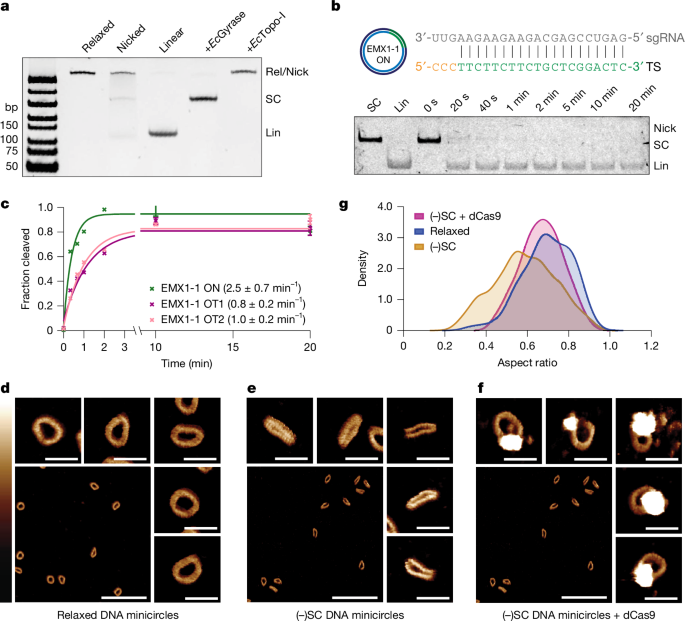
Researchers at the University of California, Berkeley, have made a significant breakthrough in understanding the structural basis of supercoiling-induced CRISPR-Cas9 off-target activity. Using a combination of experimental and computational methods, the team identified the key structural features of the CRISPR-Cas9 enzyme that contribute to off-target activity.
The researchers found that supercoiling, or the twisting of DNA, plays a critical role in inducing off-target activity in CRISPR-Cas9. They discovered that the enzyme's ability to bind to DNA is influenced by the supercoiling of the genome, leading to increased off-target activity. This finding has significant implications for the design of more precise and efficient gene editing tools.
The Implications of This Research
The discovery of the structural basis of supercoiling-induced CRISPR-Cas9 off-target activity has far-reaching implications for the field of gene editing. It may potentially lead to the creation of more targeted therapies for genetic diseases, reducing the risk of unintended off-target effects.
The researchers also suggest that their findings could be used to improve the design of CRISPR-Cas9 enzymes, making them more efficient and precise. This could lead to the development of new gene editing tools that are more effective and safer for use in humans.
The Future of Gene Editing
The discovery of the structural basis of supercoiling-induced CRISPR-Cas9 off-target activity is an important step forward in the development of gene editing technologies. It highlights the complexities of the CRISPR-Cas9 enzyme and the need for continued research into its mechanisms of action.
The researchers are optimistic about the potential of their findings to improve gene editing technologies. They believe that the discovery of the structural basis of off-target activity will lead to the development of more precise and efficient gene editing tools, revolutionizing the treatment of genetic diseases.
The study published in Nature provides a comprehensive understanding of the structural basis of supercoiling-induced CRISPR-Cas9 off-target activity, shedding light on the molecular mechanisms behind this phenomenon. This research has significant implications for the field of gene editing and may potentially lead to the creation of more targeted therapies for genetic diseases.
The researchers at the University of California, Berkeley, have made a groundbreaking discovery that could revolutionize the field of gene editing. Their research has far-reaching implications for the development of more precise and efficient gene editing tools, and may potentially lead to the creation of more targeted therapies for genetic diseases.