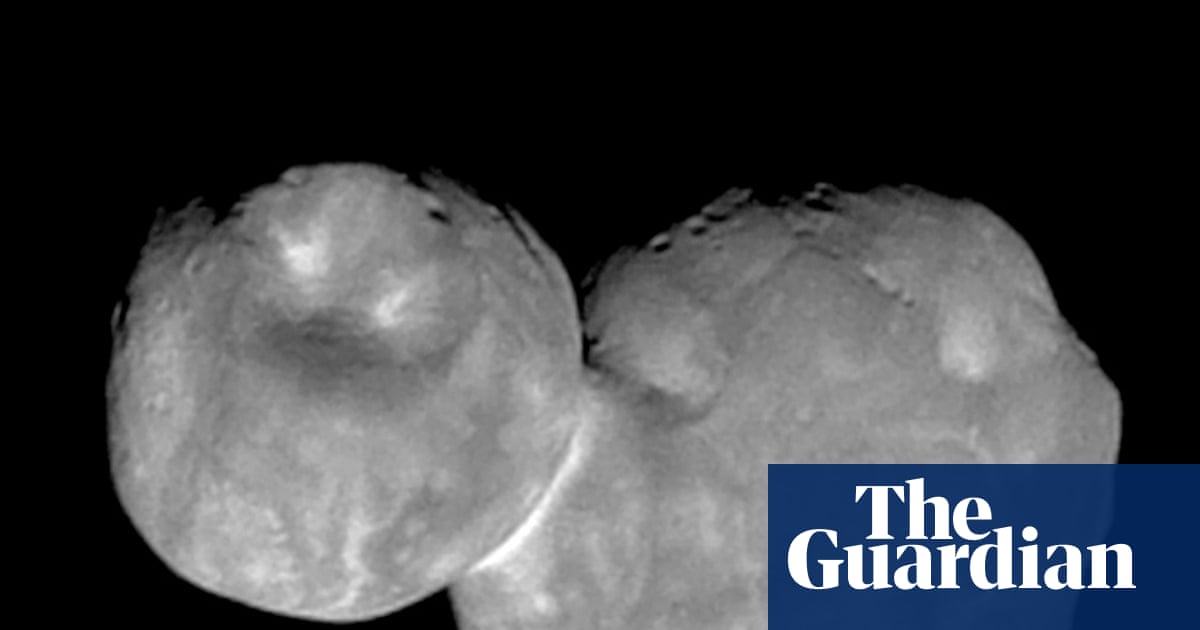
Scientists have long been fascinated by the unique snowman-shaped body discovered in the Kuiper belt, a region of icy bodies beyond Neptune. The object, dubbed "Ultima Thule," was first imaged by NASA's New Horizons spacecraft in 2019. Since then, researchers have been working to understand the object's origins, and recent simulations have provided a significant breakthrough.
Gravitational Interactions and Collisions
According to the simulations, Ultima Thule's distinctive shape may have resulted from a combination of gravitational interactions and collisions with other objects in the Kuiper belt. The simulations suggest that the object's shape is the result of a gradual process, with smaller objects colliding and merging to form a larger body over time. This process would have been influenced by the gravitational pull of nearby objects, leading to the snowman-like shape.
The simulations also suggest that Ultima Thule's shape may have been influenced by its composition. The object is thought to be composed of a mixture of water ice and darker organic material, which would have affected its response to collisions and gravitational interactions.
The Early Stages of Solar System Formation
The findings from the simulations have significant implications for our understanding of the early stages of our solar system's formation. The Kuiper belt is thought to be a remnant of the solar nebula, a disk of gas and dust that surrounded the sun in the early days of the solar system. The discovery of Ultima Thule and other objects in the Kuiper belt provides a unique window into the early stages of solar system formation.
The simulations suggest that the formation of Ultima Thule and other objects in the Kuiper belt was a complex process, influenced by a combination of gravitational interactions, collisions, and the object's composition. This process would have played a crucial role in shaping the early solar system, leading to the formation of the planets and other objects we see today.
Future Research Directions
The discovery of Ultima Thule and the findings from the simulations have significant implications for future research in the field of planetary science. Further study of the Kuiper belt and its objects will provide valuable insights into the early stages of solar system formation and the formation of the planets.
The simulations also highlight the importance of continued research into the composition and properties of objects in the Kuiper belt. This research will help scientists to better understand the formation and evolution of our solar system, and will provide valuable insights into the origins of the universe.
The discovery of Ultima Thule and the findings from the simulations mark a significant breakthrough in our understanding of the early stages of solar system formation. Further research into the Kuiper belt and its objects will continue to shed light on the origins of our solar system and the universe.