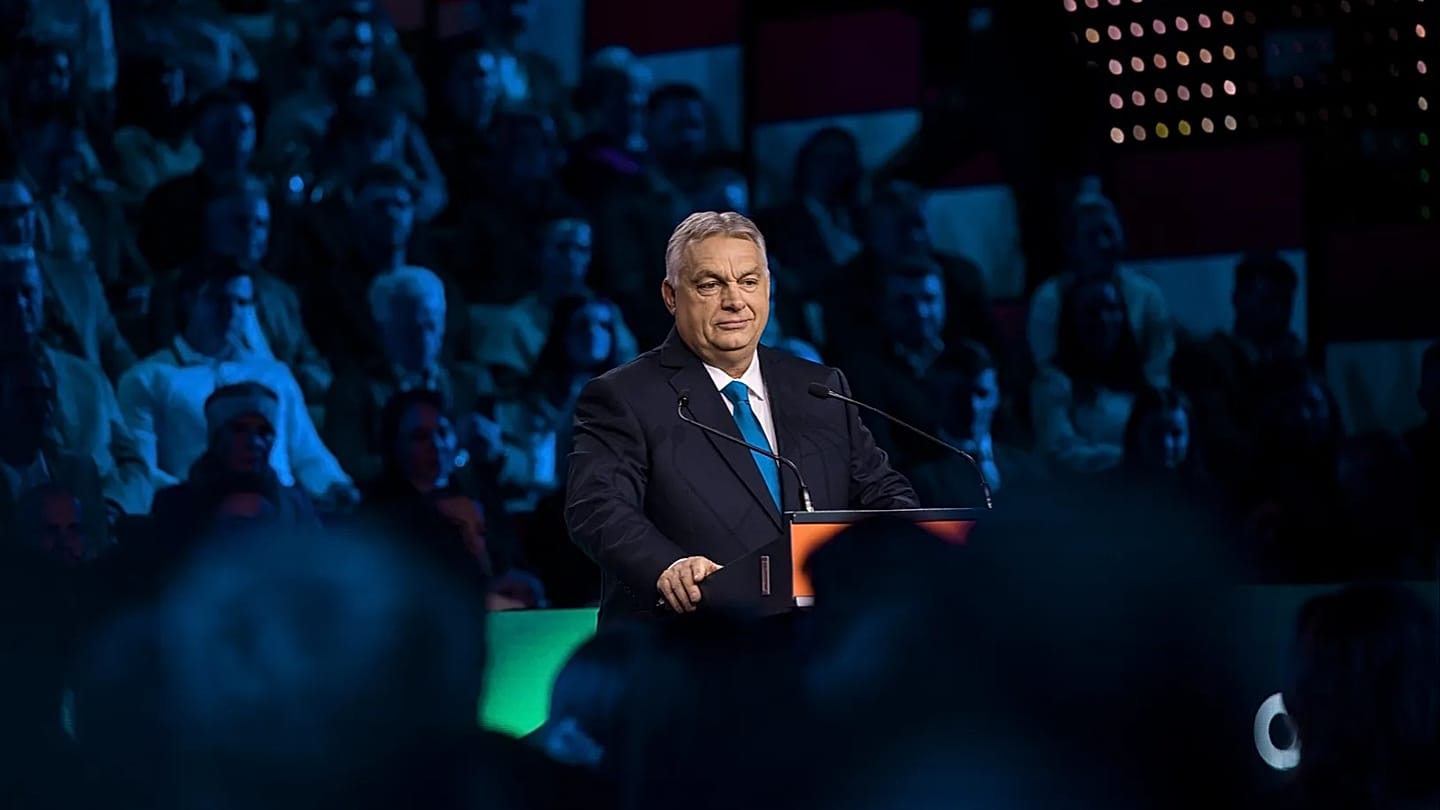
Hungary's Prime Minister Viktor Orbán has sparked controversy with his recent comments on the European Union, labeling the bloc's decision-making process as 'Putin-ing' and declaring Brussels as the real threat to European unity.
Orbán's Criticism of the EU
Speaking at a press conference in Budapest, Orbán stated that the EU's decision-making process is "primitive and frivolous" and that the bloc's leaders are more focused on maintaining their power than on serving the interests of European citizens.
The Prime Minister's comments have been met with widespread criticism from EU leaders, who have accused him of undermining the bloc's unity and trying to shift the blame for the EU's problems onto Brussels.
EU Reform and Decentralization
Orbán's government has long advocated for a more decentralized EU, arguing that the current system is overly bureaucratic and stifles national sovereignty.
The Prime Minister has called for greater autonomy for EU member states, saying that they should have more control over key policy areas such as migration and economic policy.
Brussels as the Real Threat
Orbán's declaration that Brussels is the real threat to European unity has sparked debate among EU leaders, with some arguing that the Prime Minister is trying to distract attention from his own government's policies.
However, Orbán's allies argue that the Prime Minister is highlighting a genuine concern about the EU's accountability and efficiency.
In a statement, the Hungarian government emphasized that the Prime Minister's comments were intended to spark a debate about the EU's future and to encourage reform.
As tensions rise, EU leaders will be closely watching Orbán's actions in the coming weeks to see if his government will follow through on its calls for reform.
For now, the controversy surrounding Orbán's comments serves as a reminder of the deep divisions within the EU and the challenges that lie ahead for the bloc's leaders.
The EU's ability to respond to these challenges will be crucial in determining the future of European integration and the role of countries like Hungary within the bloc.