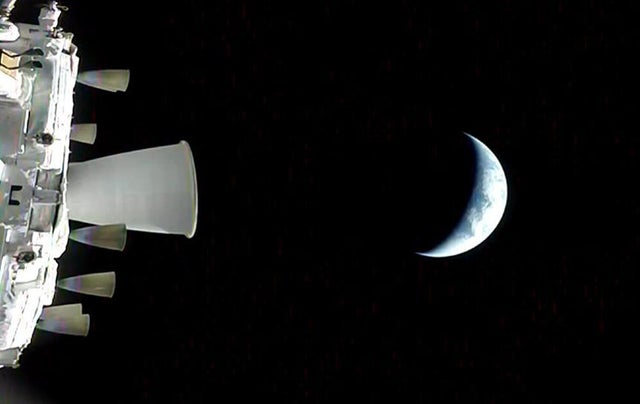
The Artemis II mission, which is set to launch in the coming months, will see a crew of four astronauts aboard the Orion spacecraft, including commander Reid Wiseman, pilot Victor Glover, and mission specialists Christina Koch and Jeremy Hansen. The crew will embark on a lunar flyby, reaching a distance of about 4,000 miles from the moon's surface.
Orion Spacecraft Ready for Liftoff
The Orion spacecraft has undergone extensive testing and validation to ensure its readiness for the mission. The spacecraft's systems have been thoroughly checked, and all necessary components have been integrated and verified. The Orion spacecraft is designed to take astronauts safely to the moon and back, providing a reliable and comfortable environment for the crew.
The crew will spend several days in space, undergoing a series of tests and evaluations to assess the spacecraft's performance. The mission will also provide valuable insights into the effects of long-duration spaceflight on the human body.
Historic Lunar Journey
The Artemis II mission marks a significant step towards NASA's goal of returning humans to the lunar surface by 2025. The mission will demonstrate the capabilities of the Orion spacecraft and provide valuable experience for the crew. The crew will also conduct scientific experiments and gather data on the lunar environment.
The mission will also pave the way for future lunar missions, including the Artemis III mission, which will see the first woman and the next man walk on the moon's surface. The Artemis program is a critical component of NASA's broader plans for space exploration, which include sending humans to Mars in the 2030s.
Preparations Underway
Preparations for the Artemis II mission are well underway, with the crew undergoing rigorous training and preparation. The crew has been training for months, learning the intricacies of the Orion spacecraft and practicing emergency procedures. The crew will also conduct a series of simulations to prepare for the mission.
The mission will be supported by a team of scientists and engineers at NASA's Johnson Space Center in Houston, Texas. The team will monitor the spacecraft's systems and provide real-time support to the crew.
The Artemis II mission is a major milestone in NASA's plans for space exploration. The mission will demonstrate the capabilities of the Orion spacecraft and provide valuable experience for the crew. The mission will also pave the way for future lunar missions, including the Artemis III mission.
The Artemis II mission is a testament to the ingenuity and determination of NASA's engineers and scientists. The mission will inspire a new generation of space explorers and cement NASA's position as a leader in space exploration.
The Artemis II mission is a historic moment in space exploration, marking a significant step towards NASA's goal of returning humans to the lunar surface. The mission will be closely watched by space enthusiasts and scientists around the world.
The Artemis II mission is a critical component of NASA's broader plans for space exploration. The mission will pave the way for future lunar missions and provide valuable insights into the effects of long-duration spaceflight on the human body.
The Artemis II mission is a major milestone in NASA's plans for space exploration. The mission will demonstrate the capabilities of the Orion spacecraft and provide valuable experience for the crew.
The Artemis II mission is a testament to the ingenuity and determination of NASA's engineers and scientists. The mission will inspire a new generation of space explorers and cement NASA's position as a leader in space exploration.
The Artemis II mission is a historic moment in space exploration, marking a significant step towards NASA's goal of returning humans to the lunar surface.