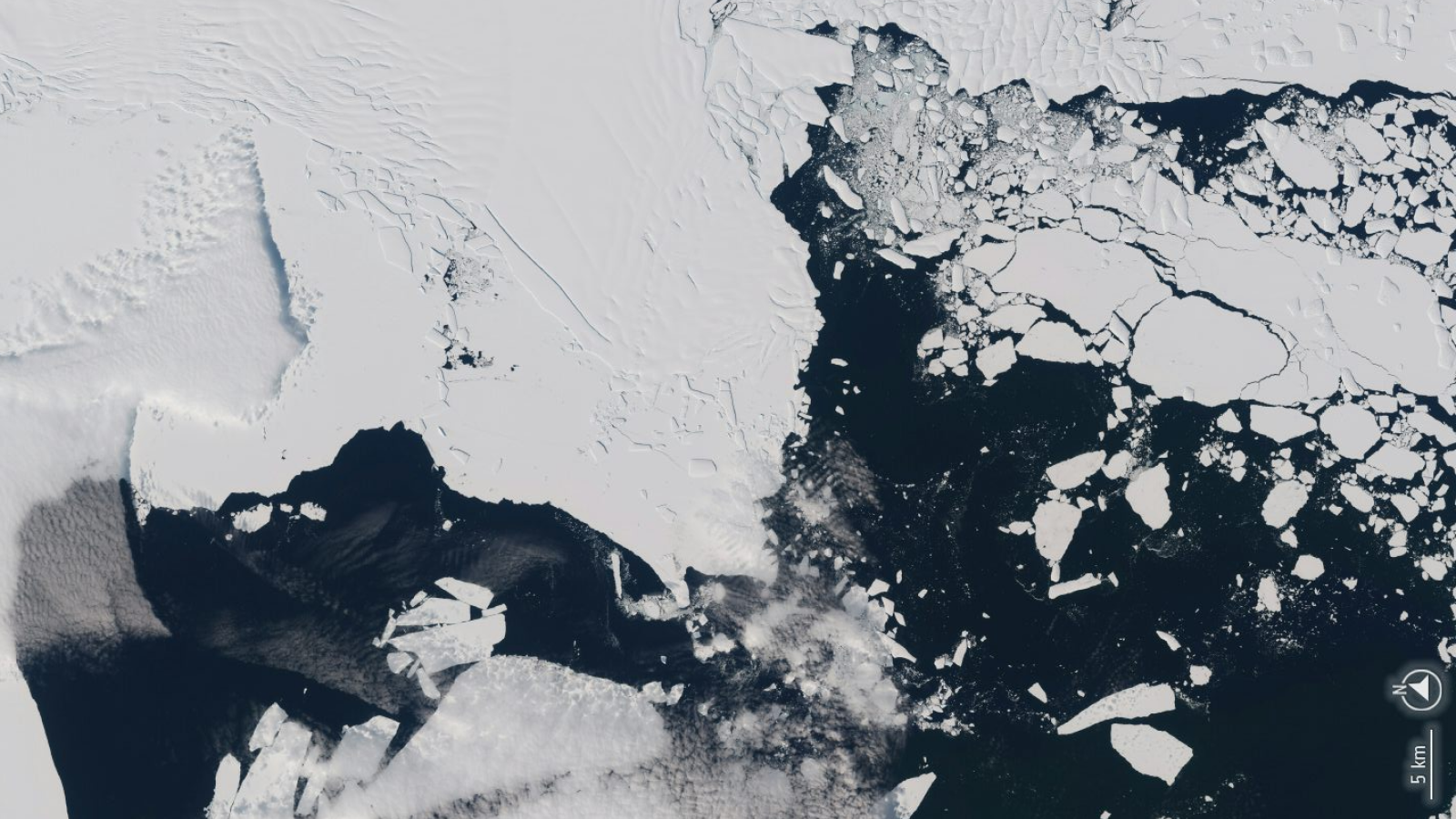
A team of researchers from the University of California, Los Angeles (UCLA) has discovered that the unstable end of Antarctica's Doomsday Glacier is experiencing unprecedented earthquake activity. The study, published in the journal Science Advances, used satellite data to monitor the glacier's movements and found a significant increase in seismic activity.
Increased Seismic Activity at the Doomsday Glacier
The researchers analyzed data from the European Space Agency's (ESA) CryoSat-2 satellite, which has been monitoring the glacier's movements since 2010. They found that the number of iceberg earthquakes at the glacier's unstable end has increased significantly over the past few years. In fact, the data shows that the glacier is experiencing hundreds of iceberg earthquakes per year, with some events reaching magnitudes of up to 4.0.
The increased seismic activity is likely a result of the glacier's instability, which has been caused by a combination of climate change and geological factors. The researchers believe that the glacier's bed is becoming increasingly rough, leading to the formation of cracks and crevasses that are producing the seismic activity.
Implications for Sea-Level Rise
The study's findings have important implications for understanding the potential consequences of the Doomsday Glacier's collapse. If the glacier were to collapse, it could lead to a significant increase in sea levels, potentially affecting millions of people worldwide. The researchers estimate that the glacier's collapse could raise sea levels by up to 3 feet (90 cm) over a period of several years.
The study's lead author, Dr. Eric Rignot, warned that the glacier's instability is a significant concern. "The Doomsday Glacier is one of the largest and most unstable glaciers in Antarctica, and its collapse has the potential to have catastrophic consequences for global sea levels," he said.
Future Research Directions
The researchers plan to continue monitoring the glacier's movements using satellite data and other techniques. They also hope to conduct further research on the glacier's bed and the underlying geological factors that are contributing to its instability.
The study's findings highlight the need for continued research on the Doomsday Glacier and its potential consequences for global sea levels. As the climate continues to change, it is essential that scientists and policymakers work together to understand and mitigate the impacts of glacier collapse.
In the meantime, the researchers are urging policymakers to take action to reduce greenhouse gas emissions and mitigate the impacts of climate change. "The Doomsday Glacier is a stark reminder of the importance of addressing climate change," said Dr. Rignot. "We need to take immediate action to reduce our carbon footprint and prevent further glacier collapse."