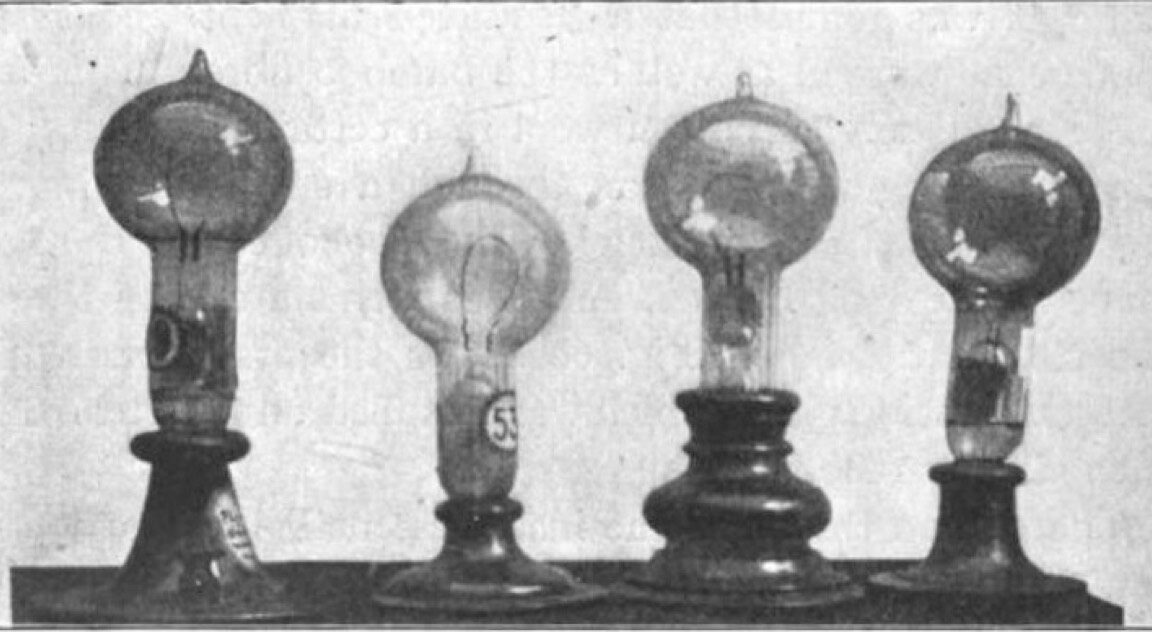
Thomas Edison is widely regarded as one of the most prolific inventors in history, holding over 1,093 patents for various devices and technologies. However, a recent study has shed new light on one of his lesser-known experiments, conducted in 1879. At the time, Edison was working on a new type of carbon-based material, which he called "carbonized cotton thread." This experiment has long been relegated to the footnotes of history, but recent analysis has sparked a renewed interest in the potential significance of this early work.
Edison's Experiment: A New Look
The 1879 experiment involved Edison's attempt to create a new type of carbon-based material using cotton thread. He treated the thread with a combination of chemicals and heat, resulting in a material that was surprisingly conductive. While Edison never pursued this line of research further, modern-day scientists have taken a closer look at his work and are now wondering if he may have stumbled upon graphene.
Graphene is a highly conductive and versatile material made up of a single layer of carbon atoms. It has a wide range of applications, from electronics to energy storage. The discovery of graphene has been a major breakthrough in recent years, with scientists exploring its potential uses in everything from supercapacitors to medical devices.
The Debate Over Graphene's Origins
The possibility that Edison accidentally created graphene has sparked a heated debate among historians and scientists. While some argue that the evidence is compelling, others are more skeptical, pointing out that Edison's experiment was not designed to create a material with the properties of graphene. The debate is ongoing, with many calling for further research to resolve the issue.
One of the key challenges in determining whether Edison created graphene is the lack of documentation from his time. Edison's laboratory notes and other records from the period are scarce, making it difficult to reconstruct exactly what he did and what he achieved. Despite this, many believe that the evidence points to a possible connection between Edison's experiment and the creation of graphene.
Implications for the Scientific Community
Regardless of whether Edison actually created graphene, the debate over his experiment has significant implications for the scientific community. It highlights the importance of reevaluating historical research and the potential for new discoveries. If Edison did create graphene, it would not only rewrite the history of science but also raise questions about the patentability of graphene and its widespread use.
The debate over Edison's experiment is also a reminder of the complexity and nuance of scientific history. It demonstrates that even the most seemingly well-established facts can be subject to revision and reinterpretation. As the scientific community continues to explore the properties and potential uses of graphene, the question of its origins remains an intriguing and important one.
In the end, the debate over Edison's 1879 experiment serves as a reminder of the power of history to shape our understanding of the present. Whether or not Edison created graphene, his work continues to inspire new discoveries and innovations. As scientists continue to push the boundaries of what is possible, the story of Edison's experiment serves as a testament to the enduring power of human ingenuity.