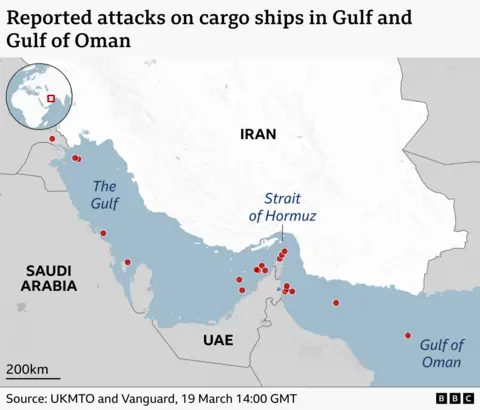
Located at the southern entrance of the Persian Gulf, the Strait of Hormuz is a narrow waterway that connects the Persian Gulf to the Gulf of Oman. The strait plays a crucial role in global energy trade, as it serves as a vital shipping lane for oil exports from the Middle East. The strait's importance extends beyond the energy sector, as it also facilitates international trade and commerce.
Key Players in the Region
Several Asian countries, including China, Japan, and South Korea, have significant interests in the Strait of Hormuz. China, for instance, relies heavily on the strait for its oil imports, with a substantial portion of its crude oil supplies passing through the waterway. Japan and South Korea also rely on the strait for a significant portion of their oil imports, highlighting the importance of the strait in meeting their energy needs.
Aside from their economic interests, these countries also have strategic concerns in the region. China, in particular, has been expanding its military presence in the region, which has raised concerns among its neighbors. Japan and South Korea, meanwhile, have been working to strengthen their defense capabilities, with a focus on ensuring their security in the region.
Escalating Tensions
The Strait of Hormuz has become a focal point of regional conflicts, with multiple countries calling for increased security measures to ensure safe passage. In recent years, the strait has witnessed a series of tanker attacks, which have raised concerns about the safety of international shipping in the region. The attacks have also led to increased tensions between the United States and Iran, with both countries accusing each other of involvement in the incidents.
The United States, in particular, has been concerned about the safety of international shipping in the Strait of Hormuz. In response to the tanker attacks, the US has deployed additional naval assets to the region, including the USS Mason, a guided-missile destroyer. The deployment of additional US naval assets has been seen as a move to deter Iran from further harassing international shipping in the region.
Regional Response
Several regional countries, including Saudi Arabia and the United Arab Emirates, have called for increased security measures to ensure safe passage through the strait. Saudi Arabia, in particular, has been critical of Iran's actions in the region, accusing it of being responsible for the tanker attacks. The Gulf Cooperation Council (GCC), a regional bloc comprising six Arab countries, has also called for increased security measures to ensure safe passage through the strait.
The regional response to the escalating tensions in the Strait of Hormuz has been shaped by the complex geopolitics of the region. The GCC countries, for instance, have been working to strengthen their defense capabilities, with a focus on ensuring their security in the region. The United Arab Emirates, meanwhile, has been working to improve its relations with the United States, with a focus on strengthening its defense ties.
The situation in the Strait of Hormuz remains complex and volatile, with multiple countries vying for influence in the region. The escalating tensions in the strait have raised concerns about the safety of international shipping in the region, highlighting the need for increased security measures to ensure safe passage.
As the situation in the Strait of Hormuz continues to evolve, it is essential for regional countries to work together to ensure safe passage through the waterway. The international community must also remain vigilant and take steps to prevent further escalation of tensions in the region.
The Strait of Hormuz remains a critical waterway for global energy trade, and its security is essential for the global economy. The escalating tensions in the strait highlight the need for increased security measures to ensure safe passage through the waterway.