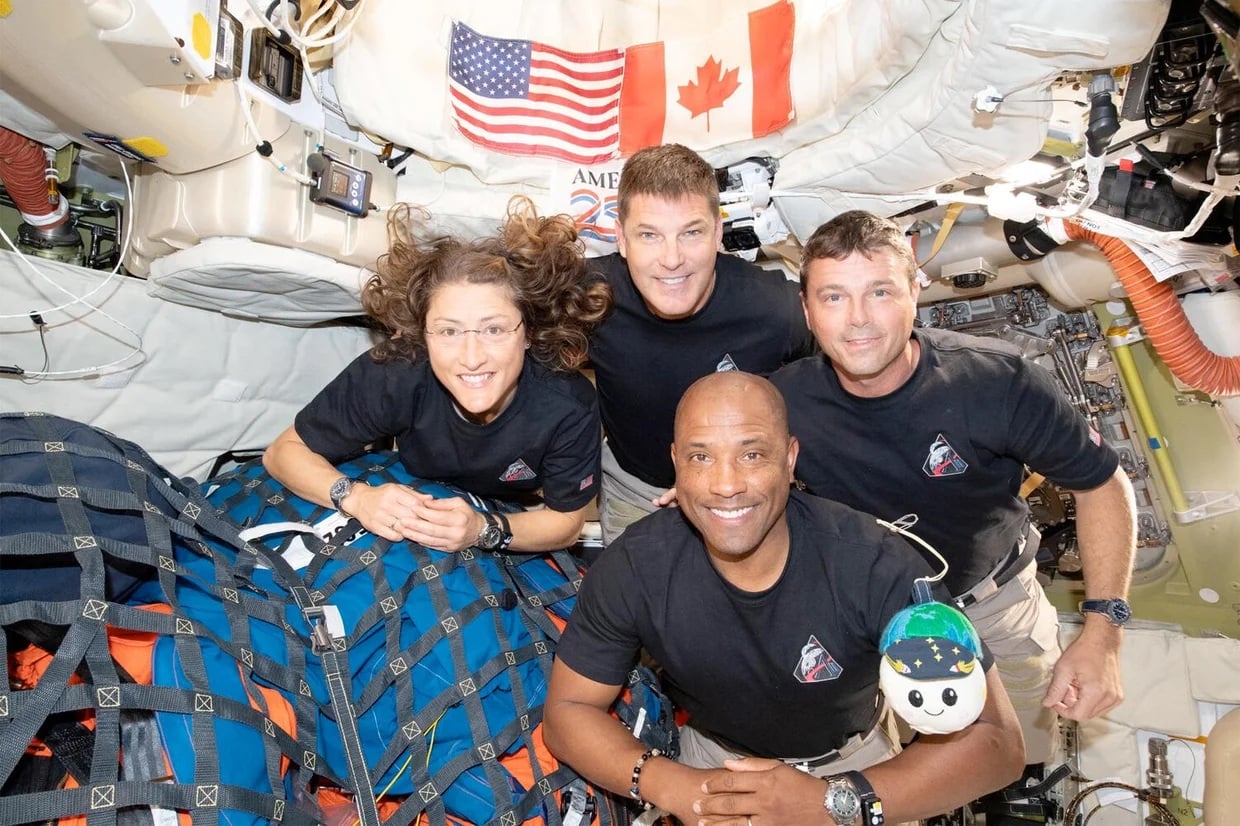
The Artemis II mission has come to an end as the astronauts prepare to head back to Earth. After spending 10 days in space, the crew has successfully completed the final tests and experiments, paving the way for the next phase of the Artemis program.
Orion Spacecraft Performance
The Orion spacecraft, designed to take humans to the lunar surface, has been put through its paces during the Artemis II mission. The spacecraft's performance has been impressive, with the crew reporting smooth and stable flight conditions throughout the mission.
The Orion spacecraft's life support systems, propulsion, and communication systems have all been tested and validated, giving NASA confidence in its ability to support future lunar missions.
Scientific Experiments
In addition to testing the Orion spacecraft, the Artemis II mission has also included a range of scientific experiments. These experiments have focused on the effects of long-duration spaceflight on the human body and the behavior of materials in microgravity.
The crew has been conducting experiments on the effects of space travel on the human body, including the impact on cardiovascular health and the effects of microgravity on the immune system.
The experiments have also been designed to test the behavior of materials in microgravity, which is essential for the development of future lunar habitats and spacecraft.
Return Journey
The Artemis II astronauts are now preparing for their return journey to Earth. The crew will re-enter the Earth's atmosphere, with the Orion spacecraft splashing down in the Pacific Ocean.
The crew will then be recovered by a NASA recovery team, who will transport them back to the Johnson Space Center in Houston, Texas.
The successful completion of the Artemis II mission marks an important milestone in the Artemis program, which aims to return humans to the lunar surface by 2025.
The Artemis II mission has been a significant success, with the astronauts completing all the required tests and experiments. The mission has provided valuable insights into the performance of the Orion spacecraft and the effects of long-duration spaceflight on the human body.
The success of the Artemis II mission is a major step forward for the Artemis program, which is aimed at returning humans to the lunar surface by 2025.
The mission has demonstrated the capabilities of the Orion spacecraft and has provided valuable information that will be used to develop future lunar missions.