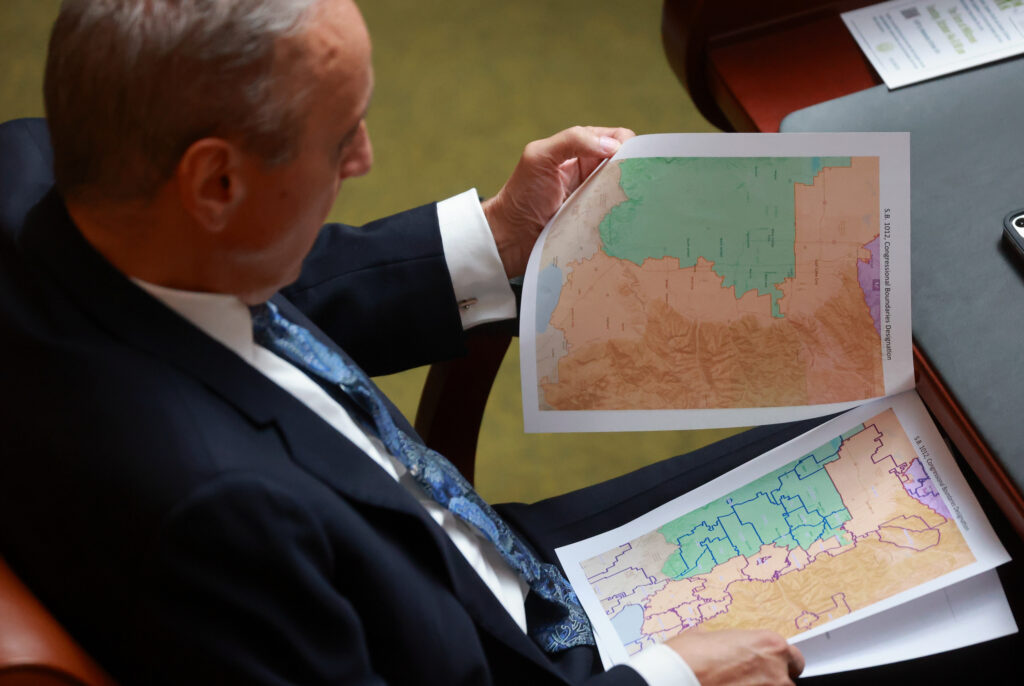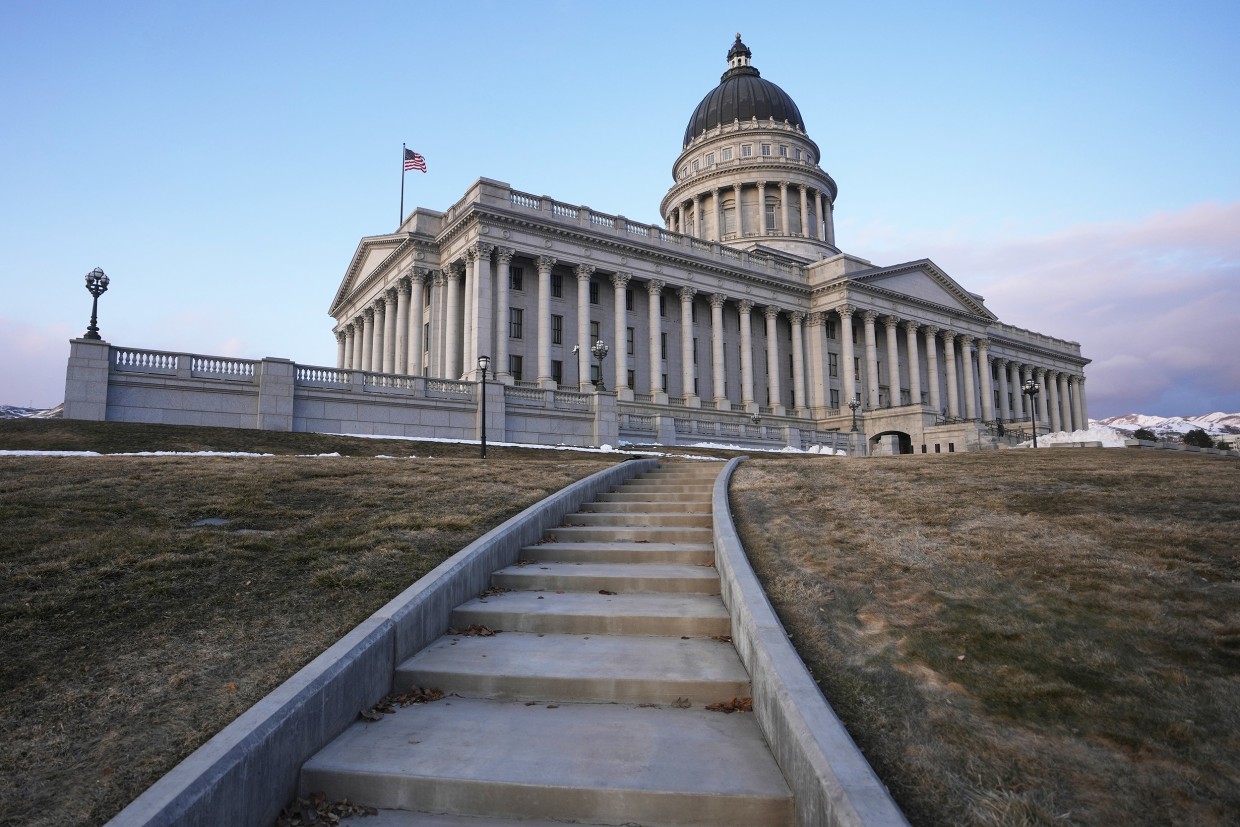
A Utah judge has dealt a significant setback to the state's Republican Party, blocking a GOP-backed plan to redraw the state's congressional map. The new map, which has been approved by the court, includes a Democratic seat, a major victory for Democrats in the state.
Background and Context
The controversy began earlier this year when the Republican-controlled state legislature passed a redistricting plan that many saw as an attempt to gerrymander the map in favor of Republican candidates. The plan was challenged by a group of Democrats and voting rights advocates, who argued that it unfairly diluted the voting power of minority voters.
The plaintiffs in the case argued that the Republican plan was designed to protect the party's majority in Congress, rather than reflect the state's changing demographics and voting patterns. They pointed to the fact that the map would have effectively eliminated a Democratic seat in the state's congressional delegation.
Judge's Ruling and Implications
In a ruling issued late last week, Utah District Court Judge David N. Mortensen rejected the Republican plan and ordered the state to adopt a new map. The new map, which was crafted by a bipartisan commission, includes a Democratic seat and is seen as a more equitable representation of the state's voting population.
The judge's ruling has significant implications for the state's elections in the coming years. With a Democratic seat now included in the map, the state's congressional delegation is likely to become more competitive, with Democrats potentially gaining a foothold in the state.
The ruling is also seen as a victory for voting rights advocates, who have long argued that gerrymandering undermines the integrity of the electoral process and disenfranchises minority voters.
Reaction from Politicians and Advocates
The decision has been met with praise from Democrats and voting rights advocates, who see it as a major victory for fairness and equity in the electoral process. "This is a huge win for democracy in Utah," said one Democratic Party official. "We're thrilled that the court has recognized the importance of fair representation and rejected the Republican Party's attempt to gerrymander the map."
Some Republicans, on the other hand, have expressed disappointment and frustration with the ruling. "We're disappointed that the court has chosen to intervene in the redistricting process," said a Republican Party official. "We believe that the map we passed was fair and legal, and we're exploring our options for appeal."
Voting rights advocates have also welcomed the ruling, which they see as a major step forward for fairness and equity in the electoral process. "This decision is a testament to the power of grassroots organizing and the importance of holding elected officials accountable for their actions," said one advocate.
The decision is likely to have far-reaching implications for the state's elections in the coming years. With a Democratic seat now included in the map, the state's congressional delegation is likely to become more competitive, with Democrats potentially gaining a foothold in the state.
The ruling has also sparked a wider debate about the role of gerrymandering in the electoral process and the need for reforms to ensure fair representation.
In the end, the decision is a reminder that the electoral process is not just about winning or losing, but about ensuring that every voice is heard and every vote counts.