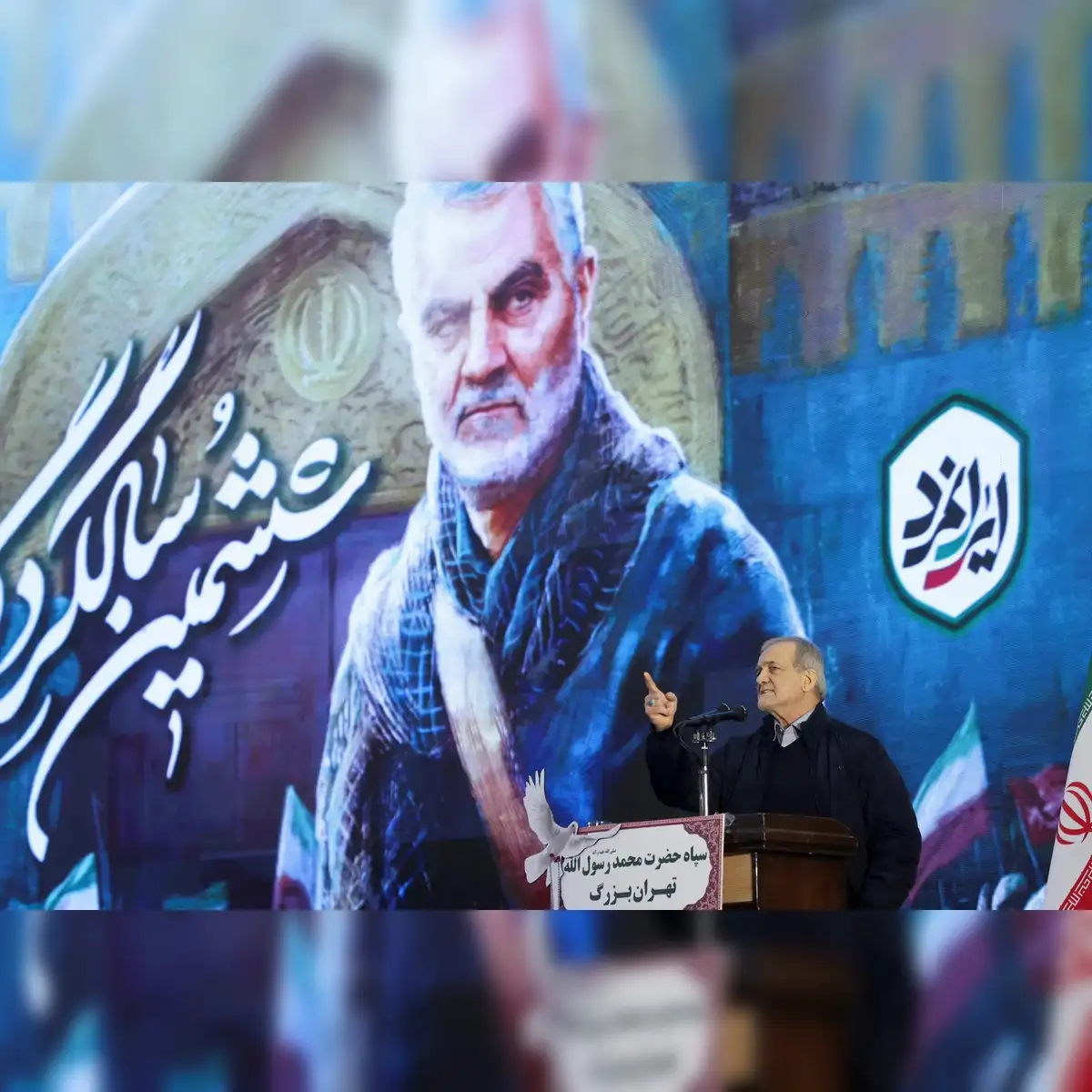
US immigration officials have made headlines after arresting several relatives of the late Iranian military commander Qassem Soleimani. The arrests come after the US government revoked the green cards of these individuals, citing concerns over national security. The move has sparked outrage from Iran, which has accused the US of "state-sponsored terrorism."
Background on Qassem Soleimani
Qassem Soleimani was a high-ranking Iranian military commander who was assassinated in a US drone strike in January 2020. At the time, the US government stated that Soleimani was responsible for planning and carrying out attacks on US personnel and interests in the region. His death was widely seen as a significant escalation of tensions between the US and Iran.
Since Soleimani's death, the US and Iran have continued to engage in a cycle of tit-for-tat actions, with both countries imposing sanctions and conducting military operations against each other. The latest move by US immigration officials is seen as a further escalation of this conflict.
US Government Explains Decision
US officials have stated that the decision to revoke the green cards of Soleimani's relatives was made due to concerns over national security. The officials claim that these individuals pose a risk to US safety and security, and that their presence in the country is no longer warranted. The US government has not released the names of the individuals involved or provided further details on their alleged activities.
Critics of the move have accused the US government of engaging in "state-sponsored terrorism" and targeting innocent civilians. They argue that the US has no right to revoke the green cards of these individuals and that the move is a clear example of retaliation against Iran.
The US government has maintained that its actions are necessary to protect national security and prevent potential threats. However, the move has sparked widespread criticism and outrage, both in the US and internationally.
International Reaction to the Move
The Iranian government has condemned the US move, calling it a "clear example of state-sponsored terrorism." Iranian officials have accused the US of targeting innocent civilians and engaging in a cycle of violence and retaliation.
Other countries in the region have also expressed concerns over the move, with some calling for calm and restraint. The UN has issued a statement urging both the US and Iran to engage in diplomatic efforts and avoid further escalation.
The international community is watching the situation closely, with many fearing that the move could lead to further conflict and instability in the region.
The US move is a clear example of the ongoing tensions between the US and Iran. As the situation continues to unfold, it remains to be seen how the international community will react and whether further escalation can be prevented.