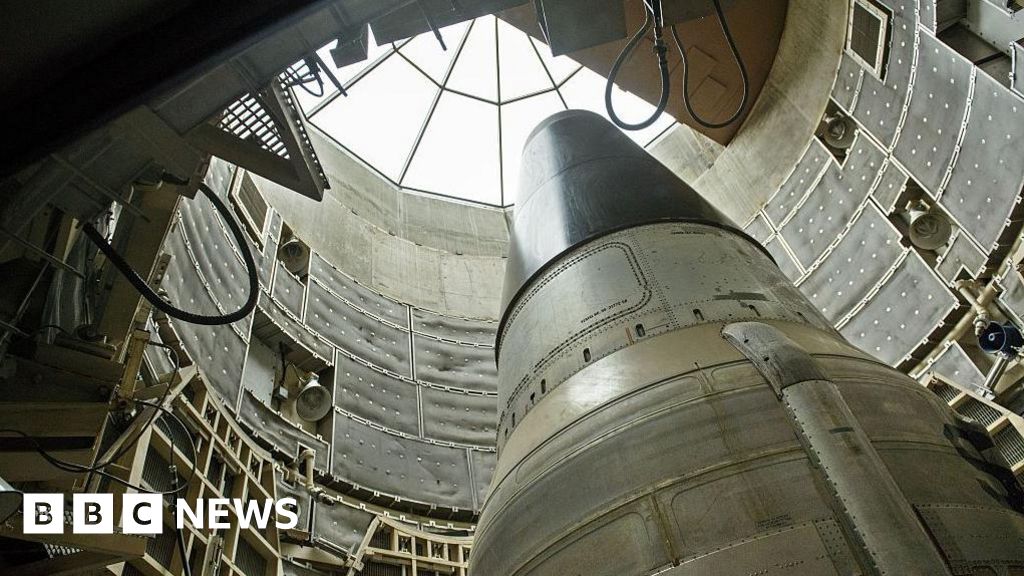
The expiration of the New Strategic Arms Reduction Treaty (New START) between the United States and Russia has sparked global fears of a new arms race. The treaty, which limits the number of nuclear warheads and ballistic missile launchers on both sides, is set to expire on February 5, 2026. The treaty was signed in 2010 by President Barack Obama and Russian President Dmitry Medvedev, with the goal of reducing the number of nuclear warheads and preventing a new arms race.
Russia's Nuclear Modernization Efforts
Russia has been modernizing its nuclear arsenal in recent years, with the development of new intercontinental ballistic missiles (ICBMs) and submarines. The country has also been working on a new nuclear-powered cruise missile, which is expected to be deployed in the near future. These advancements have raised concerns that Russia is seeking to increase its nuclear capabilities and undermine the effectiveness of the New START treaty.
Russian officials have stated that they will not extend the treaty unless the US agrees to significant reductions in its own nuclear arsenal. The US has argued that it is willing to negotiate a new treaty, but only if Russia is willing to make concessions on its nuclear modernization efforts.
US Nuclear Modernization Plans
The US has also been working on its own nuclear modernization plans, with a focus on developing new ICBMs and submarines. The country has also been investing in new nuclear-armed bombers and cruise missiles. While the US has stated that its goal is to maintain a safe and secure nuclear deterrent, critics argue that the country's modernization plans are actually increasing the risk of a new arms race.
The US has argued that its nuclear modernization plans are necessary to maintain a credible nuclear deterrent, given the advancements made by Russia and other nuclear-armed countries. However, the plans have been criticized by some as a waste of resources and a potential escalation of the nuclear arms race.
International Response and Concerns
The expiration of the New START treaty has sparked concerns among international leaders and experts. The treaty was seen as a crucial step towards reducing the number of nuclear warheads and preventing a new arms race. Without a new treaty or extension, many fear that a new arms race may be on the horizon, with potentially devastating consequences for global security.
Leaders from countries such as China, Japan, and the European Union have called for an extension or a new treaty to prevent a new arms race. The UN has also expressed concerns about the expiration of the treaty and the potential risks it poses to global security.
As the deadline for the New START treaty approaches, officials from both the US and Russia are under increasing pressure to agree on an extension or a new treaty. The international community is watching closely, hoping that a new agreement can be reached to prevent a new arms race and promote global security.
The expiration of the New START treaty is a critical moment in international relations, with far-reaching implications for global security. As the world waits to see what will happen next, one thing is clear: the stakes are high, and the consequences of failure will be severe.