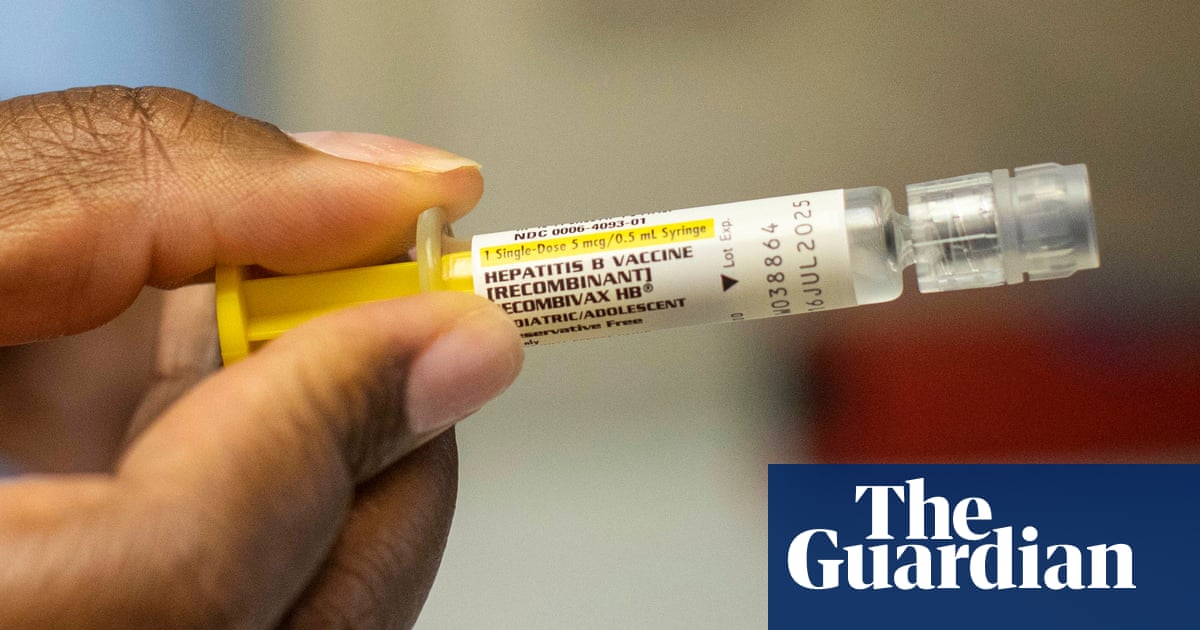
The US National Institutes of Health (NIH) has been at the center of a controversy surrounding a planned study on a hepatitis B vaccine in Africa. The study, which was set to receive $1.6 million in funding, aimed to evaluate the safety and efficacy of the vaccine in a trial involving approximately 1,500 participants. However, critics have raised concerns that the study is "highly unethical" due to the risk of exposing participants to the vaccine without their knowledge or consent.
Concerns Over Informed Consent
Critics argue that the study's design fails to guarantee informed consent from participants, which is a fundamental principle of medical research ethics. Informed consent requires that participants be fully aware of the risks and benefits of a study, and give their consent before participating. However, the NIH's plan for the study does not provide for this level of consent, sparking concerns that participants may be unwittingly exposed to the vaccine.
Dr. Peter Doshi, a professor at the University of Maryland School of Medicine, has been vocal in his criticism of the NIH's plan. "It's a highly unethical study design," he said in an interview. "The participants are not being informed of the risks and benefits of the study, and they are not being given the opportunity to give their consent."
NIH Defends the Study
The NIH has defended its plan for the study, stating that it was designed to "evaluate the safety and efficacy" of the vaccine. In a statement, the NIH said that the study was "designed to provide valuable information" about the vaccine's safety and efficacy, and that it would be conducted in accordance with "rigorous" safety protocols.
The NIH also pointed out that the study would involve a placebo-controlled trial, in which some participants would receive the vaccine and others would receive a placebo. This design would allow researchers to compare the safety and efficacy of the vaccine to a control group, and to determine whether it is effective in preventing hepatitis B infection.
International Outcry
The NIH's plan for the study has sparked an international outcry, with many experts and advocacy groups expressing concerns about the ethics of the study. The World Health Organization (WHO) has also weighed in on the issue, stating that it is "committed to ensuring that all research involving human subjects is conducted in accordance with the highest ethical standards."
Professor Doshi has called for the NIH to reconsider its plan for the study, citing concerns about the potential risks to participants. "We need to make sure that we're not putting people's lives at risk for the sake of scientific progress," he said.
In the face of mounting criticism, the NIH has put the study on hold pending further scrutiny. The agency has stated that it will re-examine its plan for the study and consider the concerns raised by critics.