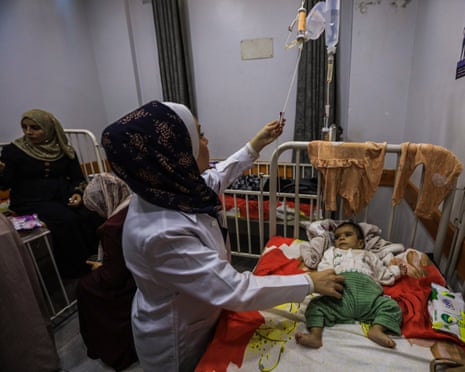
The United Nations has sounded the alarm over a devastating humanitarian crisis in Gaza, where over 9,000 children were hospitalized for acute malnutrition in October. The dire situation has been exacerbated by the ongoing economic blockade imposed by Israel and Egypt, which has severely limited the availability of basic necessities like food, water, and medicine.
Causes of Malnutrition in Gaza
The high number of cases of acute malnutrition in Gaza can be attributed to several factors, including the economic blockade, which has led to widespread poverty and unemployment. The blockade has also restricted the movement of people and goods, making it difficult for aid organizations to reach the region. Furthermore, the scarcity of food and clean water has led to a rise in respiratory and waterborne diseases, which further exacerbate malnutrition.
The situation in Gaza has been further complicated by the COVID-19 pandemic, which has placed a significant burden on the already strained healthcare system. The lack of access to basic healthcare services and medication has made it difficult for people to recover from illnesses, leading to a vicious cycle of malnutrition and disease.
International Response to the Crisis
International aid organizations have expressed deep concern over the humanitarian crisis in Gaza and have called for immediate action to address the situation. The United Nations has appealed for $1.2 billion in aid to support the people of Gaza, but the response has been slow, and the situation continues to deteriorate.
The international community has been urged to take concrete steps to address the crisis, including lifting the economic blockade and allowing aid organizations to access the region. The United States, the European Union, and other international donors have been called upon to provide emergency funding and support to help alleviate the suffering of the people of Gaza.
Long-term Solutions to the Crisis
While emergency aid is essential to address the immediate needs of the people of Gaza, long-term solutions are needed to address the root causes of the crisis. This includes investing in sustainable agricultural practices, creating jobs and stimulating economic growth, and improving access to basic healthcare services and education.
The international community must work together to find a lasting solution to the crisis in Gaza. This includes supporting a two-state solution to the Israeli-Palestinian conflict, which is the only way to bring about lasting peace and stability to the region.
The situation in Gaza is a stark reminder of the humanitarian crises that can arise when conflicts are not properly addressed. It is essential that the international community takes concrete steps to address the crisis and work towards a lasting solution.
The people of Gaza are not just statistics; they are human beings who deserve dignity, respect, and basic human rights. It is our collective responsibility to ensure that their needs are met and that they are able to live in peace and dignity.
The situation in Gaza is a call to action for the international community, and it is imperative that we respond with urgency and compassion. We must work together to address the crisis and find a lasting solution to bring about peace and stability to the region.
The future of the people of Gaza depends on our collective action, and it is our responsibility to ensure that their voices are heard and their needs are met.
We must not turn a blind eye to the humanitarian crisis in Gaza; instead, we must work together to address the crisis and find a lasting solution to bring about peace and stability to the region.