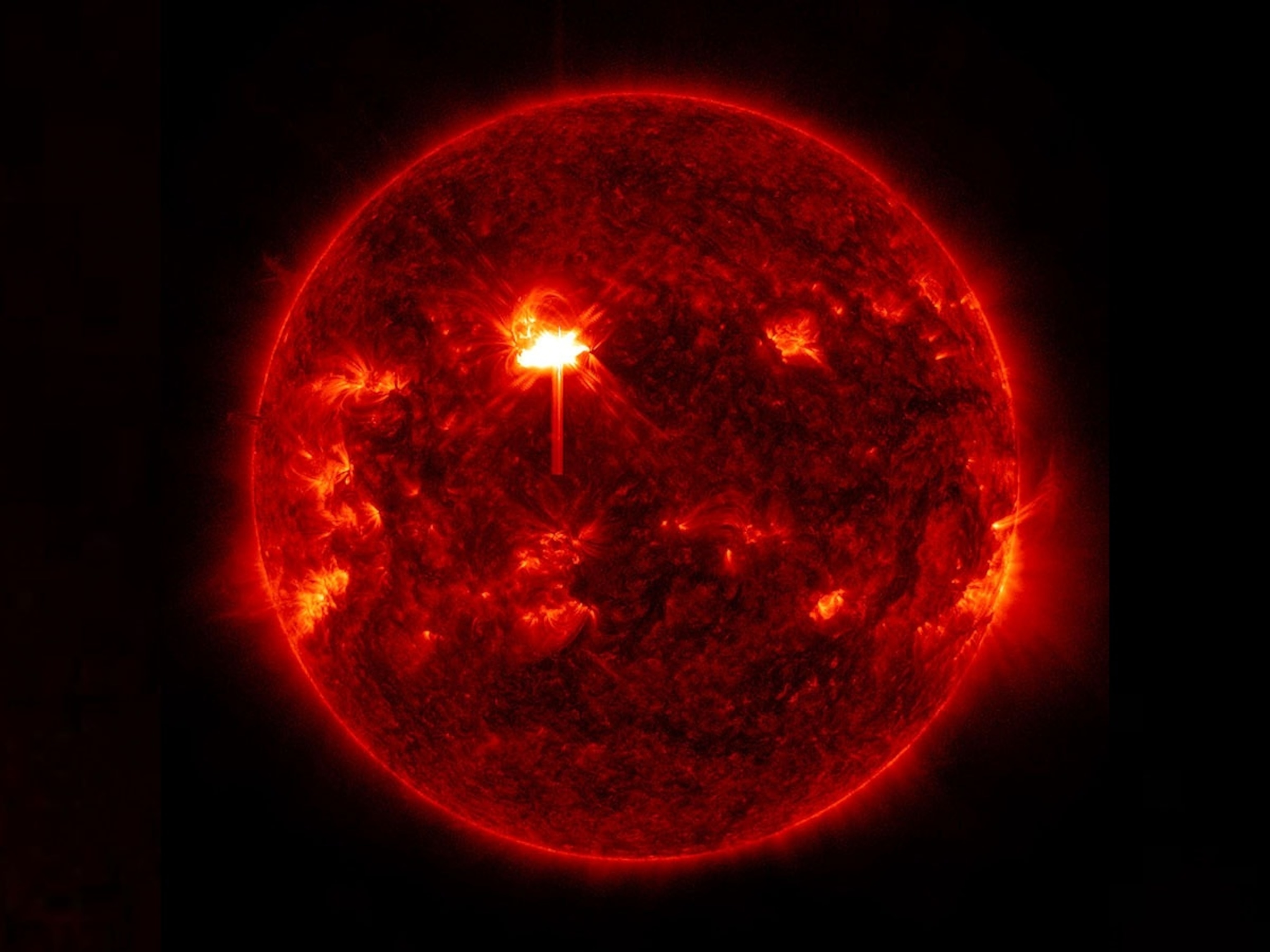
The Sun, the star at the center of our solar system, has been active lately, releasing a series of powerful solar flares that have sent shockwaves throughout the scientific community. The most recent event, which occurred on February 16 and 17, saw four strong solar flares being released, with each flare having a significant impact on the surrounding space.
Causes of the Solar Flares
Solar flares are massive releases of energy that occur when magnetic fields on the Sun's surface become unstable. When these fields break apart, they release a huge amount of energy in the form of radiation and high-energy particles. The recent solar flares were likely triggered by a combination of solar activity and the movement of charged particles in the Sun's corona.
The Sun's corona, the outer atmosphere of the star, is a region of intense magnetic activity, where charged particles are constantly moving and interacting with each other. When these particles become too energetic, they can cause the magnetic fields to become unstable, leading to the release of solar flares.
Effects on Earth's Magnetic Field
The solar flares released by the Sun are expected to have a significant impact on Earth's magnetic field, potentially causing widespread disruptions to communication and navigation systems. When solar flares interact with Earth's magnetic field, they can cause a phenomenon known as a geomagnetic storm, which can disrupt the normal functioning of satellite systems and communication networks.
The geomagnetic storm caused by the recent solar flares is expected to be moderate in intensity, but it may still cause some disruptions to communication and navigation systems. Scientists are closely monitoring the situation to predict the extent of the effects and to take necessary precautions to minimize any potential damage.
The solar flares released by the Sun are also expected to cause spectacular aurora displays in the polar regions, as the charged particles from the Sun interact with Earth's magnetic field and atmosphere. The aurora displays, also known as the Northern or Southern Lights, are a breathtaking sight, and scientists are eagerly awaiting the opportunity to observe them.
Precautions and Preparations
In preparation for the geomagnetic storm, scientists and engineers are taking precautions to protect satellite systems and communication networks from potential disruptions. This includes implementing backup systems and taking steps to minimize the impact of the storm on critical infrastructure.
Space agencies around the world are also monitoring the situation closely, using a network of satellites and ground-based observations to track the movement of charged particles and predict the extent of the effects. By working together, scientists and engineers can minimize the impact of the solar flares and ensure that critical systems remain operational.
The recent solar flares released by the Sun are a reminder of the importance of monitoring the Sun's activity and taking precautions to protect our planet from potential disruptions. By staying informed and prepared, we can minimize the impact of these events and ensure that our critical systems remain operational.
The Sun's activity is constantly changing, and scientists are working hard to understand the underlying mechanisms that drive these events. By studying the Sun's behavior, we can gain a deeper understanding of the complex interactions that occur in our solar system and better prepare ourselves for the challenges that lie ahead.