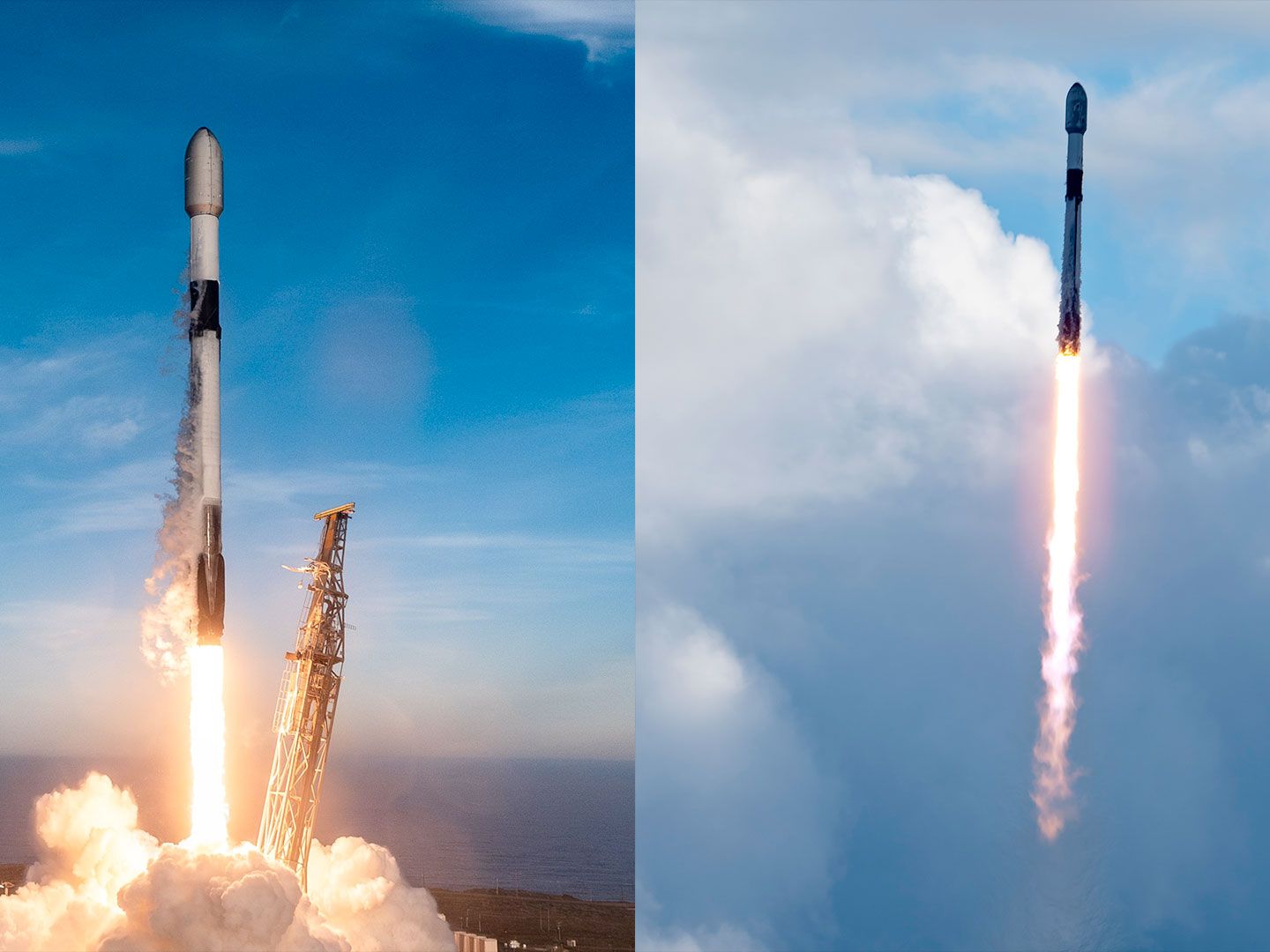
SpaceX has been at the forefront of a satellite internet revolution, with its Starlink constellation aiming to provide fast and reliable connectivity to remote and underserved areas worldwide. In a significant development, the company has launched two Starlink batches in a span of two days, signaling its aggressive expansion plans in the satellite internet market.
Launch Details
The first launch took place on February 28th from Kennedy Space Center's Launch Complex 39A on the East Coast of Florida. The Falcon 9 rocket, which carried 49 Starlink satellites into orbit, successfully lifted off at 6:19 PM EST. In a remarkable feat, the rocket's first stage landed back on Earth after the launch, marking a significant milestone in reusable rocket technology.
The second launch occurred on March 1st from Vandenberg Space Force Base in California. The Falcon 9 rocket carried 40 Starlink satellites into orbit, with a successful liftoff at 10:55 PM PST. The launch marked the first time SpaceX has launched a Starlink batch from the West Coast, underscoring the company's commitment to diversifying its launch sites.
Starlink's Growing Presence
With these back-to-back launches, SpaceX has further expanded its Starlink constellation, bringing the total number of operational satellites to over 2,000. The company's low-Earth orbit satellites are designed to provide fast and reliable internet connectivity, with the ability to beam signals directly to users' devices. This technology has the potential to bridge the digital divide in remote areas, where traditional internet infrastructure is lacking.
As Starlink expands its reach, it is expected to offer a range of services, including high-speed internet, voice, and video streaming. The company has already begun offering beta testing for its Starlink services in several countries, including the United States, Canada, and the United Kingdom.
Impact on Global Connectivity
The launch of the Starlink constellation has significant implications for global connectivity. With its vast reach and high-speed internet capabilities, Starlink has the potential to transform the way people access information and communicate. The service is expected to benefit not only individuals but also businesses and governments, which can rely on Starlink for critical communication and data transfer.
As the world becomes increasingly digital, the need for reliable and fast internet connectivity is growing. SpaceX's Starlink is poised to play a crucial role in meeting this demand, especially in areas where traditional infrastructure is lacking. With its aggressive expansion plans, SpaceX is well on its way to becoming a leading player in the global satellite internet market.
As the technology continues to evolve, it will be exciting to see how Starlink shapes the future of global connectivity. With its commitment to innovation and customer satisfaction, SpaceX is well-positioned to make a significant impact in the years to come.