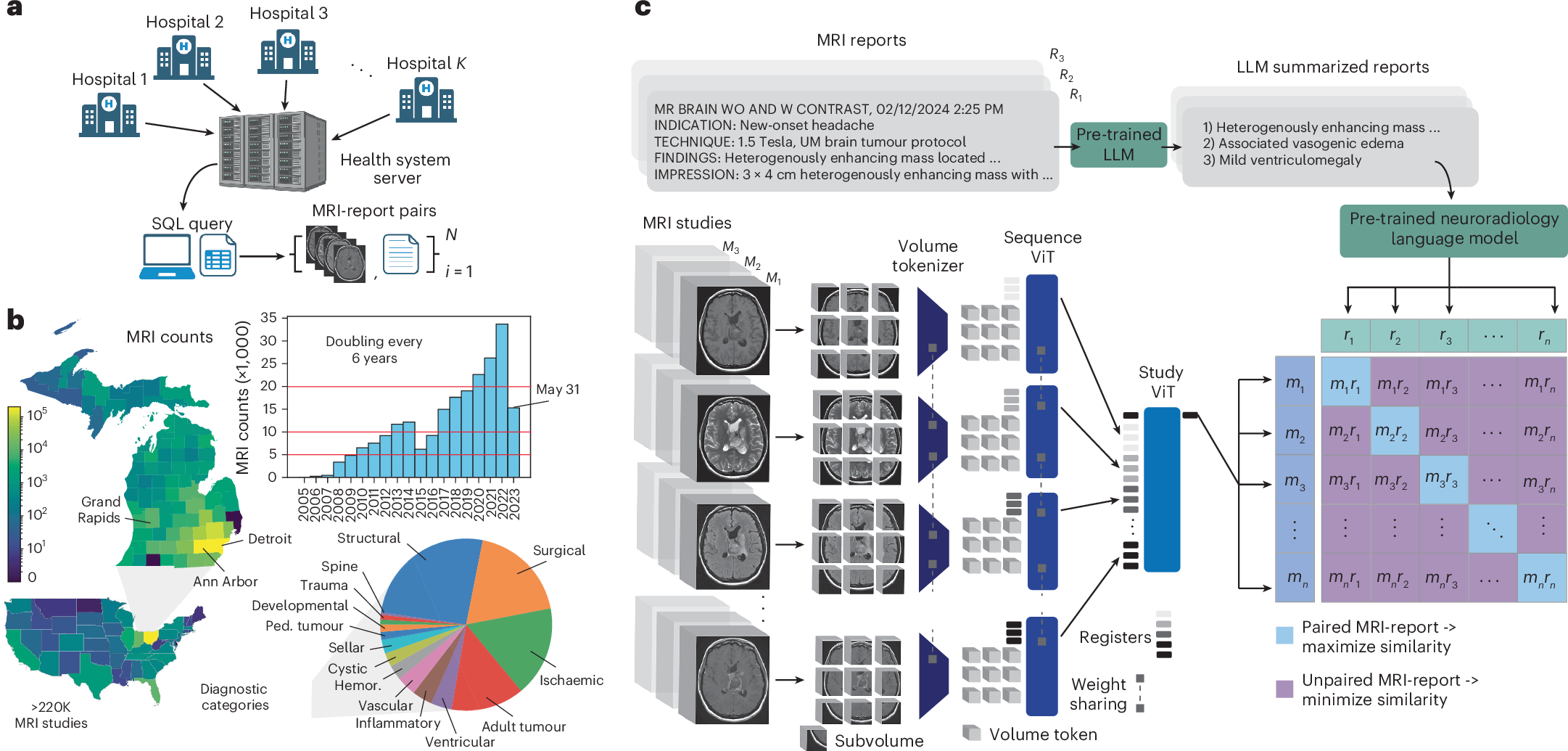
Advances in medical imaging have enabled healthcare professionals to visualize the brain's intricate structures in unprecedented detail. However, analyzing these complex images remains a daunting task, requiring significant expertise and time. To address this challenge, scientists have been exploring the application of machine learning algorithms to neuroimaging data.
A Novel Approach to Neuroimaging Analysis
Researchers from various institutions have collaborated to develop a machine learning model that leverages health system-scale data to extract hidden patterns in brain scans. This innovative approach utilizes a combination of deep learning techniques and transfer learning to identify subtle abnormalities in brain structure and function.
The model's performance was evaluated using a large dataset comprising over 100,000 brain scans from various patient populations. Results showed that the machine learning model accurately detected neurological abnormalities, outperforming traditional analysis methods in many cases.
Implications for Neurological Disorders
The potential applications of this machine learning model are vast, with implications for the diagnosis and treatment of various neurological disorders, including Alzheimer's disease, Parkinson's disease, and stroke. By identifying subtle abnormalities in brain scans, healthcare professionals can develop targeted treatment plans, leading to improved patient outcomes.
Furthermore, this technology has the potential to reduce healthcare costs by streamlining the diagnostic process and minimizing the need for invasive procedures. As the model continues to evolve, it may also enable researchers to better understand the underlying causes of neurological disorders, leading to the development of novel treatments.
Future Directions and Challenges
While the results of this study are promising, several challenges remain before this technology can be widely adopted. These include ensuring the model's accuracy and reliability across diverse patient populations, as well as addressing concerns related to data privacy and security.
Future research will focus on addressing these challenges and exploring the model's potential applications in clinical settings. As the field of neuroimaging continues to evolve, it is likely that machine learning will play an increasingly important role in revolutionizing the way we diagnose and treat neurological disorders.
In conclusion, the development of this machine learning model represents a significant breakthrough in the field of neuroimaging. By unlocking hidden patterns in brain scans, healthcare professionals can better diagnose and treat neurological disorders, leading to improved patient outcomes and reduced healthcare costs.