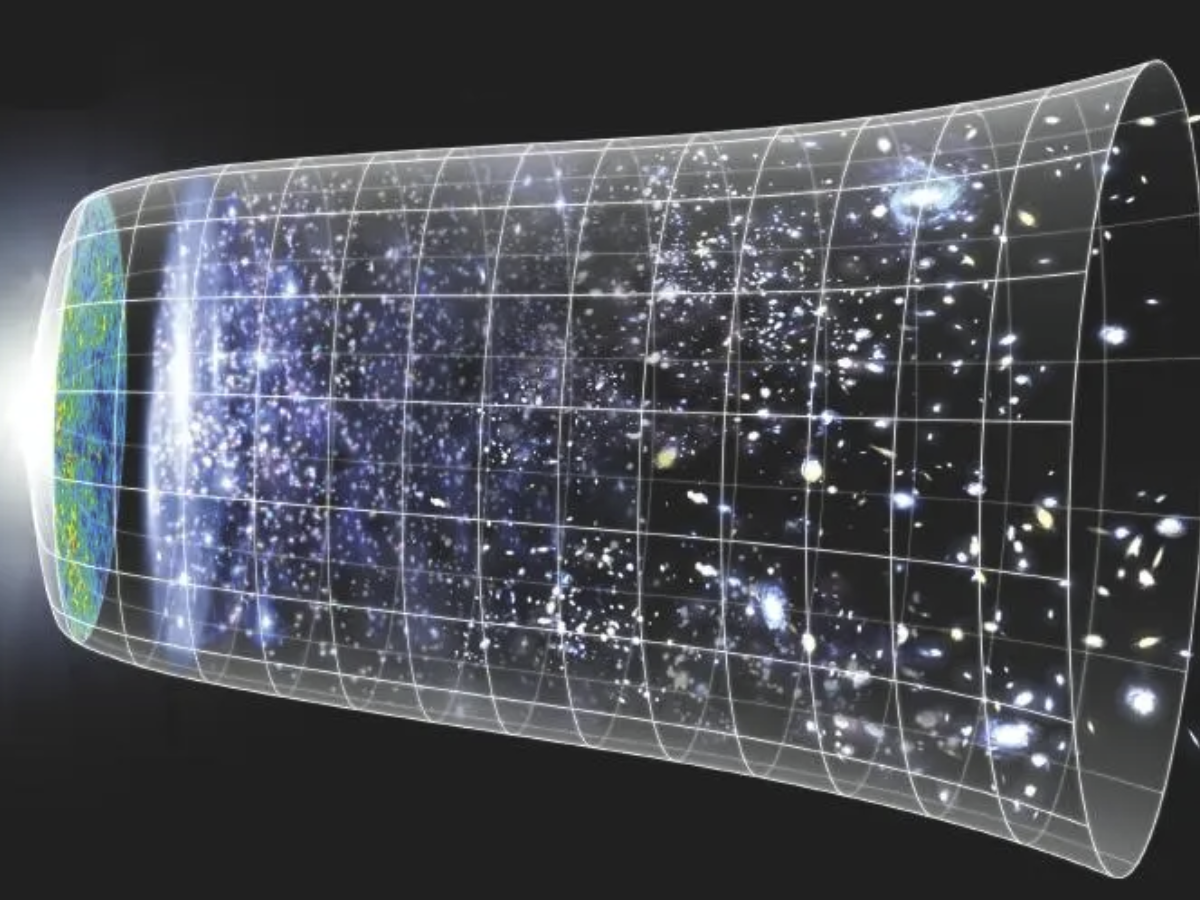
The universe's expansion rate has been a subject of intense debate among scientists for decades. While the Hubble constant, which measures the rate of expansion, has been well-established, recent observations have revealed a discrepancy between the observed and predicted rates. This 'Hubble tension' has sparked heated discussions among experts, with some arguing that the universe is expanding faster than expected, while others claim that it is expanding more slowly.
Understanding the Hubble Tension
The Hubble tension is a result of the difference between the observed rate of expansion, as measured by the Hubble constant, and the predicted rate based on the universe's age and composition. This discrepancy has been observed in various studies, including those using the cosmic microwave background radiation and the supernovae data. The Hubble constant, denoted as H0, has been measured to be around 67 kilometers per second per megaparsec, but some studies suggest that it could be as high as 73 kilometers per second per megaparsec.
The Hubble tension is not just a theoretical issue; it has significant implications for our understanding of the universe's evolution. If the universe is expanding faster than expected, it could affect our understanding of the universe's age, composition, and the formation of galaxies. On the other hand, if the universe is expanding more slowly, it could imply that the universe is older than previously thought.
Ripples in Spacetime
Researchers have been searching for a solution to the Hubble tension, and a recent study has made a significant breakthrough. The study, published in the journal Nature, has discovered ripples in spacetime that could help explain the discrepancy. These ripples, known as gravitational waves, are produced by the acceleration of massive objects, such as black holes or neutron stars.
The researchers used a combination of observations and simulations to detect the gravitational waves. They analyzed data from the Laser Interferometer Gravitational-Wave Observatory (LIGO) and the Virgo detector, which are designed to detect gravitational waves produced by the merger of two black holes. By analyzing the waveforms, the researchers were able to identify the ripples in spacetime that could be related to the Hubble tension.
The discovery of gravitational waves is a significant achievement, as it confirms a key prediction made by Einstein's theory of general relativity. The detection of these waves also provides a new way to test the theory and understand the universe's evolution.
Implications for the Universe's Expansion Rate
The discovery of gravitational waves has significant implications for our understanding of the universe's expansion rate. If the ripples in spacetime are indeed related to the Hubble tension, it could mean that the universe is expanding at a rate that is consistent with the observed rate. This would resolve the long-standing debate and provide a new understanding of the universe's evolution.
The implications of this discovery are far-reaching, as it could affect our understanding of the universe's age, composition, and the formation of galaxies. It could also provide new insights into the nature of dark matter and dark energy, which are thought to be responsible for the universe's accelerating expansion.
The study's findings are a significant breakthrough in the field of cosmology and have the potential to revolutionize our understanding of the universe's evolution. As researchers continue to study the gravitational waves and their relation to the Hubble tension, we can expect new insights into the universe's mysteries.
The discovery of gravitational waves has opened new avenues for research and has the potential to transform our understanding of the universe. As scientists continue to explore the universe, we can expect new breakthroughs and discoveries that will shed light on the universe's secrets.