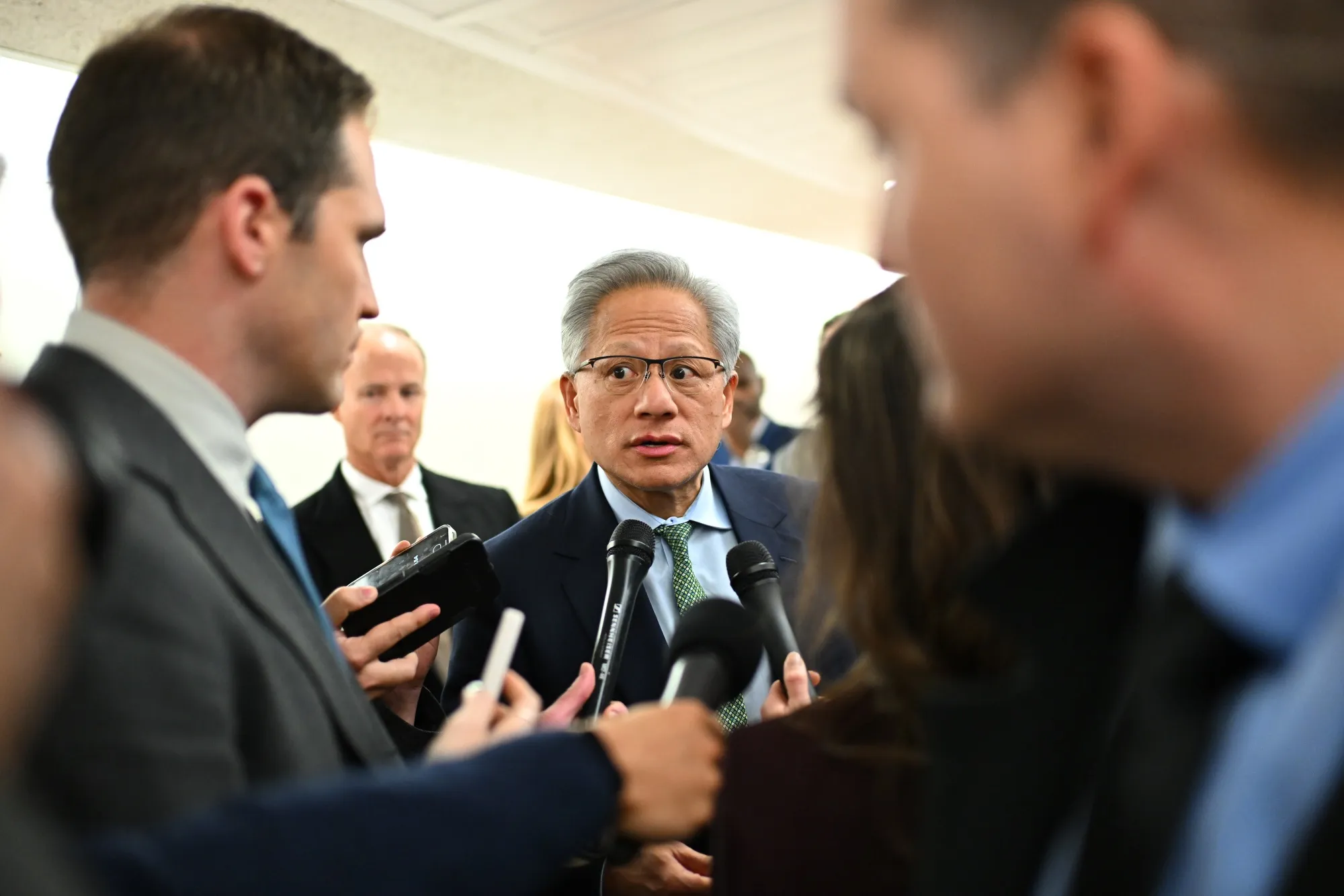
Nvidia, a leading American technology company specializing in graphics processing units (GPUs) and high-performance computing hardware, has been at the forefront of the tech industry's advancements. The company's latest H200 chips, announced earlier this year, promise to revolutionize the field of artificial intelligence and deep learning. However, the company's CEO, Jensen Huang, has expressed concerns about the regulatory environment in China, a key market for Nvidia's products.
Nvidia's Uncertainty Over China's Regulatory Hurdles
Speaking in an interview, Huang stated that Nvidia is unsure whether China would accept its H200 chips due to the country's regulatory environment. The Chinese government has been tightening its grip on the technology sector, imposing restrictions on exports and imports, and increasing scrutiny on foreign companies operating within the country.
Huang emphasized that Nvidia is committed to complying with all applicable laws and regulations in China, but the company is uncertain about the specific requirements and restrictions that may apply to its H200 chips. This uncertainty has sparked concerns about the potential impact on Nvidia's business and the global market.
Global Market Implications
The uncertainty surrounding Nvidia's H200 chips has sent shockwaves through the tech industry, with analysts and investors expressing concerns about the potential impact on the global market. The H200 chips are a key component in many applications, including artificial intelligence, deep learning, and gaming. Any restrictions or delays in their adoption could have far-reaching consequences for the industry.
Other companies, such as Intel and AMD, have also been affected by China's regulatory environment. The country's restrictions on exports and imports have created a complex and challenging landscape for foreign companies operating within the country.
Nvidia's Commitment to Compliance
Nvidia has a long history of working with regulatory authorities in China, and the company has committed to complying with all applicable laws and regulations. Huang emphasized that Nvidia is committed to ensuring the security and integrity of its products, while also navigating the complex regulatory environment in China.
Nvidia has already taken steps to address the concerns raised by the Chinese government, including implementing additional security measures and providing greater transparency into its operations. The company will continue to work closely with regulatory authorities to ensure compliance with all applicable laws and regulations.
As the situation unfolds, it remains to be seen whether China will accept Nvidia's H200 chips. However, one thing is clear: the regulatory environment in China is becoming increasingly complex and challenging for foreign companies operating within the country.