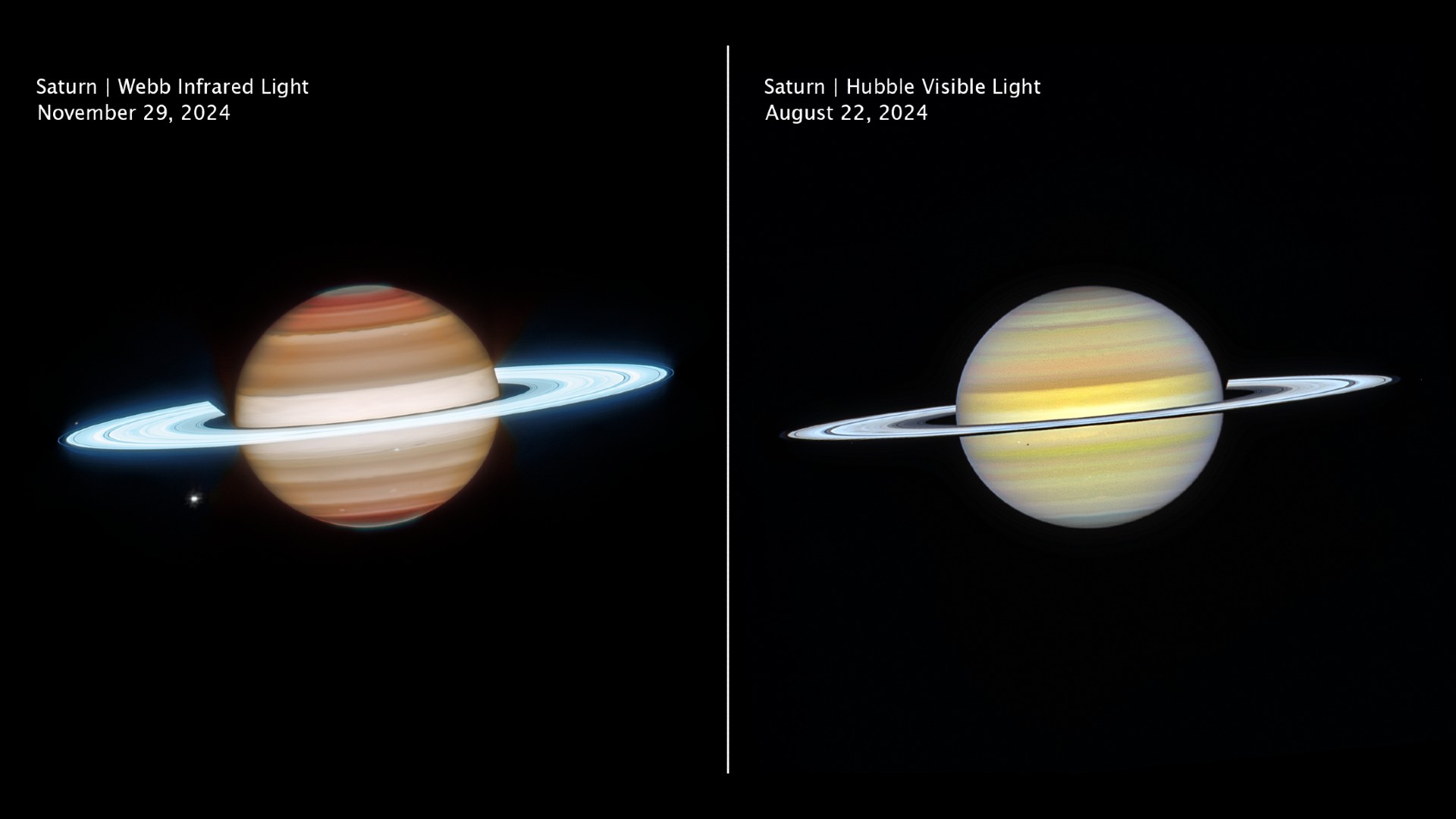
The collaboration between NASA's James Webb Space Telescope and the Hubble Space Telescope has yielded a treasure trove of new images, offering scientists a unique opportunity to study Saturn in unprecedented detail. The Webb telescope, launched in December 2021, has been equipped with the most advanced instruments to date, allowing it to capture images with unparalleled resolution and sensitivity.
Unraveling the Mysteries of Saturn's Atmosphere
The new images reveal a Saturnian atmosphere teeming with storm systems, swirling clouds, and mesmerizing aurora displays. By analyzing these visuals, scientists can gain a deeper understanding of the atmospheric dynamics at play, including the formation of cloud patterns and the movement of wind currents.
One of the most striking features in the images is the presence of a massive storm system, which appears to be a giant vortex in the northern hemisphere of Saturn. This phenomenon is thought to be similar to the Great Red Spot on Jupiter, a persistent anticyclonic storm that has been raging for centuries.
Unlocking the Secrets of Saturn's Rings
The images also provide a detailed look at Saturn's iconic ring system, showcasing the intricate patterns and structures that have captivated astronomers for centuries. By studying the ring dynamics, scientists can gain insights into the formation and evolution of our solar system, as well as the potential for life to exist in the Saturnian system.
The Webb and Hubble telescopes have captured images of the F ring, a narrow and delicate ring that is thought to be a remnant of a moon that was destroyed by Saturn's gravitational forces. By analyzing these images, scientists can gain a better understanding of the ring's composition and behavior.
Advancing Our Understanding of Saturn's Moons
The images also reveal the intricate details of Saturn's moons, including the moon Enceladus, which is thought to have a subsurface ocean that could potentially support life. By studying the moons, scientists can gain a better understanding of the Saturnian system's potential for hosting life beyond Earth.
The Hubble Space Telescope has captured images of the moon Titan, which is notable for its thick atmosphere and surface lakes of liquid methane. By analyzing these images, scientists can gain insights into the moon's geology and potential for life.
These incredible new images are set to revolutionize our understanding of the Saturnian system, providing scientists with a fresh perspective on the planet's atmosphere, rings, and moons. As researchers continue to analyze the images, we can expect to uncover even more secrets about this fascinating celestial body.
The collaboration between the Webb and Hubble telescopes serves as a testament to the power of international cooperation in space exploration. By working together, scientists from around the world can pool their resources and expertise to achieve groundbreaking results.
The images captured by the Webb and Hubble telescopes are a testament to the ingenuity and dedication of scientists and engineers who have worked tirelessly to make this collaboration a reality. As we continue to explore the universe, we can expect to discover even more incredible sights and secrets about our place in the cosmos.