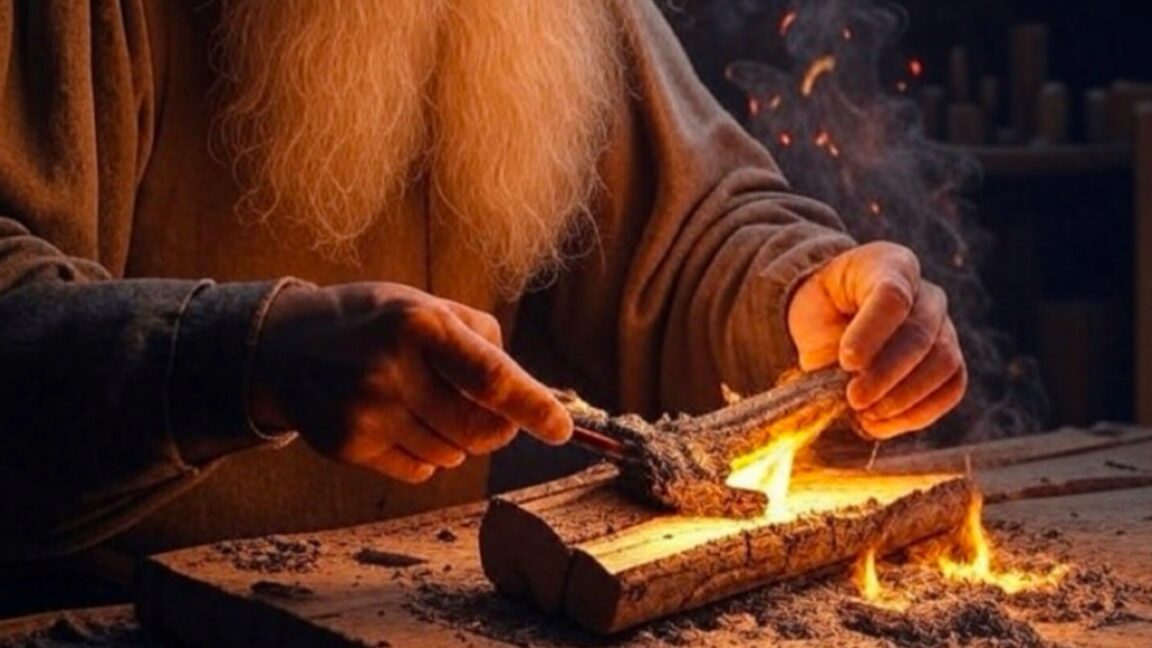
Leonardo da Vinci, the renowned Italian polymath, is known for his groundbreaking contributions to art, science, and engineering. However, a team of researchers has recently uncovered an intriguing aspect of his work that has been largely overlooked: his innovative method of wood charring. This ancient technique, which involves charring wood to prevent decay and preserve its structure, was previously believed to have originated in Japan. However, a meticulous examination of da Vinci's notebooks and manuscripts has revealed that he was experimenting with this method as far back as the 15th century.
Leonardo's Wood Charring Method Revealed
Da Vinci's wood charring method involved applying a combination of heat and controlled charring to the wood, resulting in a stable and durable material that resisted decay and insect infestation. This technique was likely used in the construction of wooden structures, as well as in the creation of artistic objects and furniture. The research team, led by historian and wood expert, Dr. Emma Taylor, has extensively studied da Vinci's notebooks and manuscripts, uncovering a wealth of information about his wood charring experiments.
One of the most significant aspects of da Vinci's wood charring method is its potential impact on our understanding of the artist's creative process. By examining his notebooks and manuscripts, researchers can gain valuable insights into his design and experimentation techniques, which may have influenced his artistic and scientific endeavors. Furthermore, the discovery of da Vinci's wood charring method has sparked interest among woodworking enthusiasts and conservationists, who are now exploring the potential applications of this ancient technique in modern contexts.
Implications for Woodworking and Conservation
The discovery of da Vinci's wood charring method has significant implications for the fields of woodworking and conservation. By applying this ancient technique, woodworkers and conservators may be able to create more durable and stable wooden structures, reducing the need for chemical preservatives and other treatments. This approach could also have a positive impact on the environment, as it eliminates the use of hazardous chemicals and minimizes waste.
Dr. Taylor and her team are currently exploring the potential applications of da Vinci's wood charring method in modern contexts, including the preservation of historical wooden structures and the creation of sustainable wooden products. As researchers continue to study and refine this ancient technique, we may uncover new and innovative ways to work with wood, while honoring the legacy of a true Renaissance master.
Uncovering the Secrets of the Past
The discovery of da Vinci's wood charring method is a testament to the enduring value of historical research and the importance of uncovering the secrets of the past. By examining the notebooks and manuscripts of a brilliant mind like da Vinci, we can gain a deeper understanding of the creative process and the innovative spirit that has driven human progress throughout history.
As we continue to explore the mysteries of da Vinci's wood charring method, we may uncover new insights into the artist's work and the cultural context of his time. This discovery has the potential to inspire a new generation of woodworkers, conservators, and historians, who will build upon the foundations laid by da Vinci and push the boundaries of what is possible with wood.
In conclusion, the discovery of da Vinci's wood charring method is a remarkable example of the power of historical research and the importance of exploring the secrets of the past. As we continue to uncover the mysteries of this ancient technique, we may uncover new and innovative ways to work with wood, while honoring the legacy of a true Renaissance master.
The study of da Vinci's wood charring method is an ongoing process, and we can expect to hear more about this fascinating topic in the coming months and years. For now, we can celebrate the discovery of a hidden treasure, one that sheds new light on the innovative spirit of a true genius.
As we look to the future, it is clear that the discovery of da Vinci's wood charring method will have a lasting impact on the fields of woodworking and conservation. By embracing this ancient technique, we can create more sustainable and durable wooden structures, while honoring the legacy of a true Renaissance master.