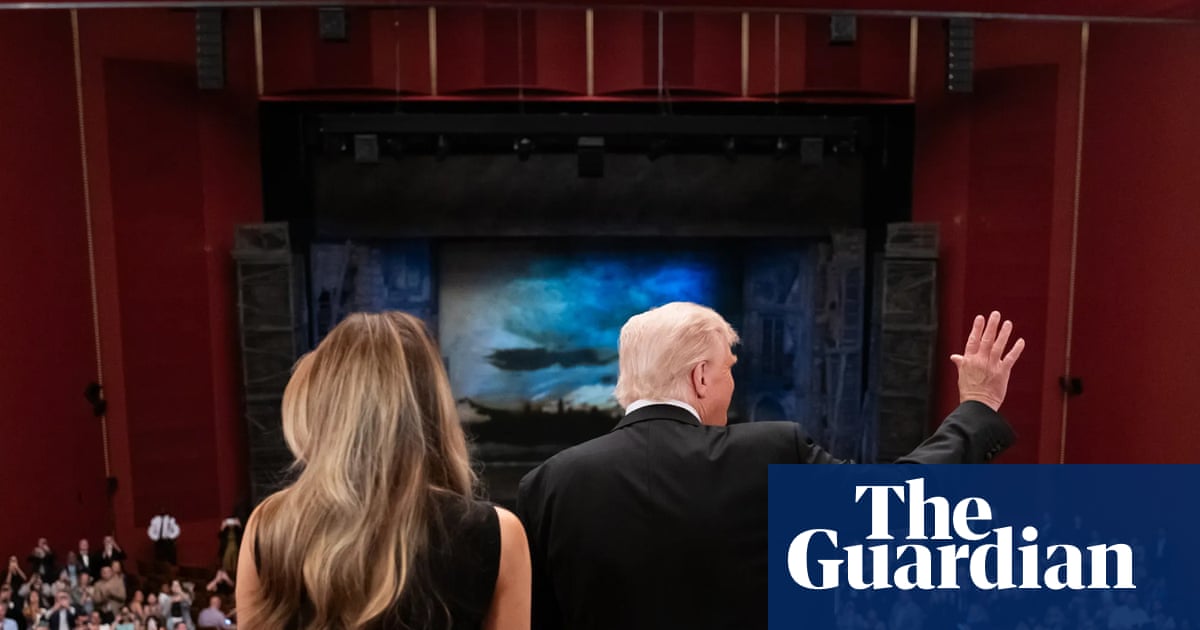
The John F. Kennedy Center for the Performing Arts is one of the most prestigious cultural institutions in the United States, hosting a wide range of performances, exhibitions, and events each year. However, the center has recently found itself at the center of a controversy after it was revealed that officials made last-minute changes to its rules in order to add former President Donald Trump's name to its list of honorees.
According to reports, the Kennedy Center's Board of Trustees voted to add Trump's name to the National Medal of Arts, a prestigious award given to individuals who have made significant contributions to the arts. However, critics claim that the decision was made without proper consideration and that the rules were changed at the last minute to accommodate Trump.
Changes to the Rules
Documents obtained by The Guardian show that the Kennedy Center's Board of Trustees made significant changes to its rules just days before the vote to add Trump's name to the list of honorees. The changes included loosening the criteria for selection and allowing for more flexibility in the decision-making process.
While the Kennedy Center has not publicly confirmed the details of the rule changes, critics argue that they were made solely to ensure that Trump's name would be added to the list. The move has sparked outrage among those who claim that the changes were made in bad faith and that the decision was not made with the usual level of rigor and scrutiny.
Outrage and Backlash
The news has sparked widespread outrage and criticism from artists, musicians, and cultural leaders who have long been associated with the Kennedy Center. Many have expressed their disappointment and frustration with the decision, with some even calling for a boycott of the institution.
Other critics have accused the Kennedy Center of politicizing its selection process and of compromising its integrity in order to curry favor with Trump and his supporters. The controversy has also raised questions about the impact of politics on the arts and the role of cultural institutions in promoting civic engagement and discourse.
Impact on the Kennedy Center's Reputation
The controversy is likely to have a significant impact on the Kennedy Center's reputation and its ability to attract top talent and audiences in the future. The institution has long been seen as a bastion of artistic excellence and a champion of the arts, but the decision to add Trump's name to the list of honorees has undermined its credibility and integrity.
The Kennedy Center has a long history of honoring artists and cultural leaders who have made significant contributions to the arts. However, the decision to add Trump's name to the list has raised questions about the institution's commitment to artistic excellence and its ability to navigate the complex and often contentious world of politics.
The controversy surrounding the Kennedy Center's decision to add Trump's name to its list of honorees is a stark reminder of the challenges facing cultural institutions in the United States today. As the arts become increasingly politicized, institutions like the Kennedy Center must navigate complex and often contentious issues while maintaining their commitment to artistic excellence and integrity.
The decision to add Trump's name to the list of honorees has sparked a heated debate about the role of politics in the arts and the impact of cultural institutions on civic engagement and discourse. As the controversy continues to unfold, it remains to be seen how the Kennedy Center will recover from this setback and what steps it will take to restore its reputation and integrity.
In the meantime, the controversy has raised important questions about the role of cultural institutions in promoting civic engagement and discourse. As the arts become increasingly politicized, it is essential that institutions like the Kennedy Center prioritize artistic excellence and integrity while navigating the complex and often contentious world of politics.
The Kennedy Center's decision to add Trump's name to its list of honorees has sparked a heated debate about the role of politics in the arts and the impact of cultural institutions on civic engagement and discourse. As the controversy continues to unfold, it remains to be seen how the Kennedy Center will recover from this setback and what steps it will take to restore its reputation and integrity.
The controversy surrounding the Kennedy Center's decision to add Trump's name to its list of honorees is a stark reminder of the challenges facing cultural institutions in the United States today. As the arts become increasingly politicized, institutions like the Kennedy Center must navigate complex and often contentious issues while maintaining their commitment to artistic excellence and integrity.
The Kennedy Center's decision to add Trump's name to its list of honorees has sparked a heated debate about the role of politics in the arts and the impact of cultural institutions on civic engagement and discourse. As the controversy continues to unfold, it remains to be seen how the Kennedy Center will recover from this setback and what steps it will take to restore its reputation and integrity.
The controversy surrounding the Kennedy Center's decision to add Trump's name to its list of honorees is a stark reminder of the challenges facing cultural institutions in the United States today. As the arts become increasingly politicized, institutions like the Kennedy Center must navigate complex and often contentious issues while maintaining their commitment to artistic excellence and integrity.
The Kennedy Center's decision to add Trump's name to its list of honorees has sparked a heated debate about the role of politics in the arts and the impact of cultural institutions on civic engagement and discourse. As the controversy continues to unfold, it remains to be seen how the Kennedy Center will recover from this setback and what steps it will take to restore its reputation and integrity.