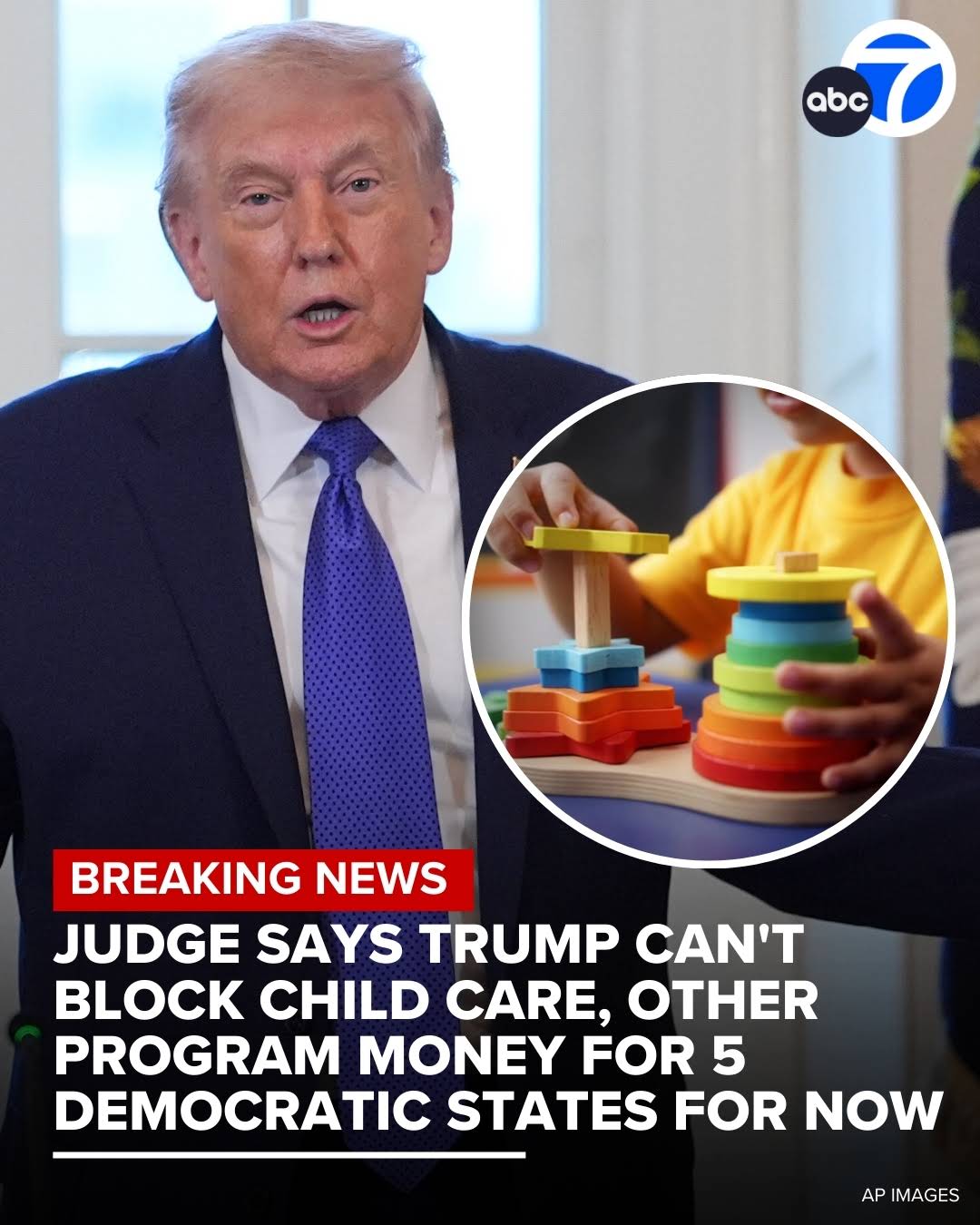
A federal judge has issued a temporary restraining order blocking the Trump administration's efforts to withhold child care and other program funds from five states. The ruling, issued on January 5, comes as a relief to the states of Michigan, New Mexico, New York, Washington, and Wisconsin, which had been planning to implement budget cuts in response to the administration's actions.
Background on the Dispute
The dispute began in December, when the Trump administration announced that it would be withholding funding for child care and other programs in the five states. The administration argued that the states had not complied with certain federal regulations, including a requirement that they implement work requirements for certain recipients of the child care program.
The states, however, argued that the regulations were overly burdensome and that the administration's actions were an attempt to impose its own policy preferences on the states.
Judge's Ruling and Its Implications
In its ruling, the judge found that the states had not been given sufficient notice of the administration's plans to withhold funding, and that the administration's actions were too severe and would cause irreparable harm to the states and their residents.
The judge's decision will allow the states to access the funds while the case is being appealed. However, the ruling is only temporary, and the administration has indicated that it will continue to pursue its efforts to withhold funding.
Reaction from the States and the Administration
The states affected by the ruling have welcomed the decision, with Michigan Governor Gretchen Whitmer calling it a "huge victory" for the state's residents. New York Governor Kathy Hochul said that the ruling would help to ensure that the state's child care programs would continue to operate without interruption.
The Trump administration, however, has expressed disappointment with the ruling, with a spokesperson saying that the administration was "disappointed in the judge's decision and will continue to pursue its efforts to ensure that the states comply with federal regulations."
The case is likely to be appealed, and the dispute may ultimately be decided by the Supreme Court. In the meantime, the states will continue to operate their child care programs and other affected programs, despite the uncertainty and disruption caused by the administration's actions.
The ruling has also raised questions about the Trump administration's use of federal regulations to impose its policy preferences on the states. Critics argue that the administration's actions amount to an attempt to rewrite federal law and undermine the authority of state governments.
The case is also being closely watched by advocates for low-income families and children, who rely on the child care program and other affected programs for support. The ruling has provided some relief to these families, but the dispute is far from over.
The judge's decision will have far-reaching implications for the states and the federal government, and will likely have a significant impact on the country's child care and social services landscape.
The case is a reminder of the ongoing power struggle between the federal government and state governments, and the role of the courts in resolving disputes between the two.
The Trump administration's actions have sparked concerns about the impact on vulnerable populations, including low-income families and children.
The case is a complex and multifaceted one, with significant implications for the states, the federal government, and the country as a whole.