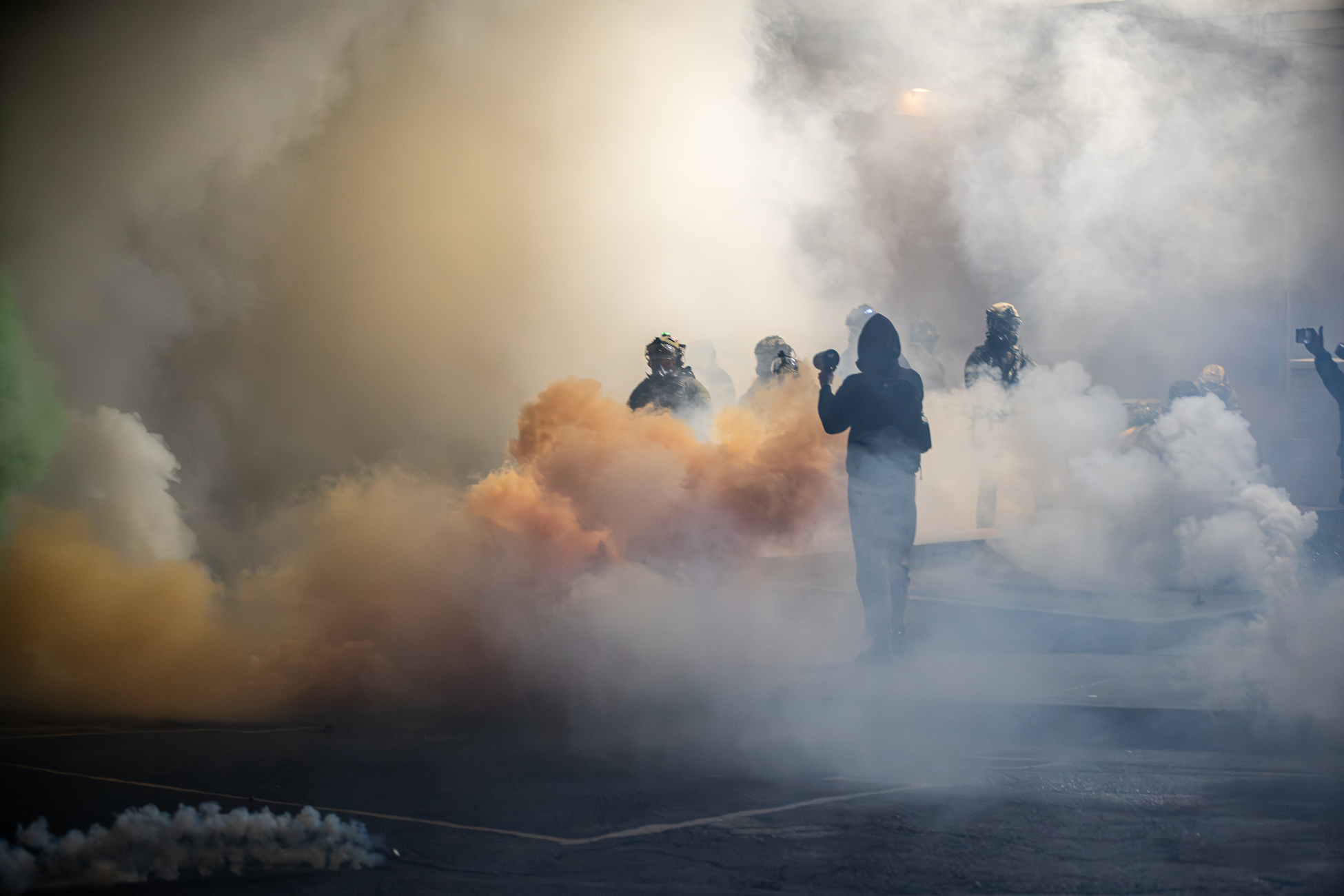
In a significant ruling, a federal judge has placed restrictions on the use of tear gas, rubber bullets, and other munitions by federal agents at protests outside the Immigration and Customs Enforcement (ICE) facility in Portland, Oregon. The decision was made in response to allegations of excessive force by federal authorities during recent protests.
Background on the Protests
The protests, which began in July 2020, were sparked by the presence of federal agents in Portland, who were deployed to quell civil unrest and support local law enforcement. However, the deployment of federal agents was met with widespread criticism, with many accusing them of using excessive force against protesters.
The protests, which have continued for months, have seen frequent clashes between protesters and law enforcement, with both sides using various forms of force, including tear gas, rubber bullets, and pepper spray.
Ruling and Restrictions
U.S. District Judge Marco A. Hernandez imposed the restrictions on the use of tear gas, rubber bullets, and other munitions by federal agents, citing concerns over public safety and the need to prevent harm to protesters. The ruling specifically prohibits the use of munitions within 150 feet of protesters, unless there is a specific and imminent threat to public safety.
The judge also ordered federal authorities to provide advance notice of any planned use of force, allowing protesters to take necessary precautions and avoid confrontations. Furthermore, the ruling requires federal agents to provide medical assistance to protesters who are injured during clashes.
Impact of the Ruling
The ruling has been welcomed by civil rights groups, who have long accused federal authorities of using excessive force against protesters. The decision is seen as a significant victory for advocates of peaceful protest and a step towards greater accountability for law enforcement.
However, federal authorities have expressed concerns over the restrictions, arguing that they will hinder their ability to maintain public safety and prevent property damage. The Department of Homeland Security has stated that it will comply with the ruling, but has also warned that it may appeal the decision.
The ruling is a significant development in the ongoing debate over the use of force by law enforcement during protests. As the situation continues to unfold, it remains to be seen how the restrictions will impact the protests and whether they will lead to greater cooperation between protesters and law enforcement.