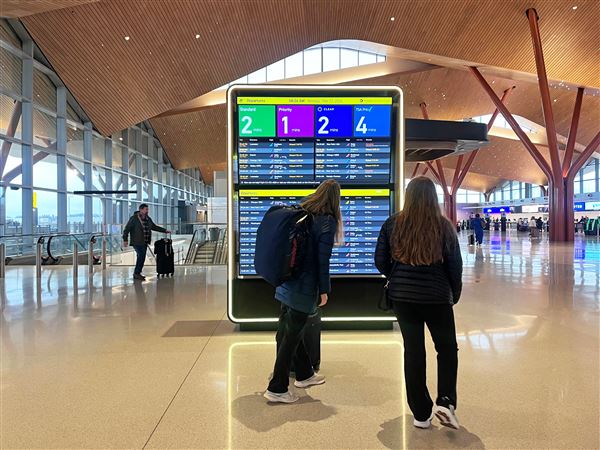
The recent stalemate over TSA funding has left the agency with limited resources, prompting the deployment of ICE agents to several major airports, including Pittsburgh International Airport. According to reports, the ICE agents are primarily tasked with conducting immigration enforcement activities and assisting with security screenings.
Escalating Tensions at Pittsburgh International
Airport officials have confirmed that the ICE agents began arriving at Pittsburgh International Airport on Tuesday, citing the need for increased security measures in the wake of the TSA funding crisis. While the airport has emphasized that the deployment of ICE agents is a result of federal policy, staff and passengers have raised concerns about the potential implications of these new security measures.
Pittsburgh International Airport spokesperson, Robert A. Ealy, stated, "We are working closely with federal authorities to ensure the safe passage of travelers while also adhering to federal policies. However, we understand that the presence of ICE agents may cause some concern among our passengers."
Funding Stalemate Affects TSA Nationwide
The ongoing funding stalemate has left the TSA with significantly reduced resources, forcing the agency to scale back operations and implement cost-saving measures. According to TSA officials, the agency has been operating with a reduced staff, resulting in longer wait times and reduced security screenings at checkpoints.
The TSA funding crisis has sparked a heated debate in Congress, with lawmakers on both sides of the aisle arguing over the best course of action to address the issue. As the stalemate continues, the TSA remains underfunded, leaving the agency vulnerable to further cuts and disruptions.
Passenger Concerns and Airline Industry Response
Passengers at Pittsburgh International Airport have expressed concerns about the increased security presence, citing fears about the potential implications of ICE agents' involvement in airport security. However, airline industry officials have emphasized the need for cooperation with federal authorities to ensure the safe passage of travelers.
Airline Association spokesperson, John B. Strong, stated, "We understand that the presence of ICE agents may raise concerns among passengers, but we emphasize the importance of cooperation with federal authorities to ensure the safe and secure passage of travelers."
As the funding stalemate continues to affect the TSA nationwide, concerns about the implications of ICE agents' involvement in airport security are likely to grow. Meanwhile, airport officials and airline industry representatives are working to mitigate the effects of the funding crisis and ensure the safe passage of travelers.
The deployment of ICE agents at Pittsburgh International Airport marks a new chapter in the ongoing saga of the TSA funding crisis, sparking concerns among airport staff and passengers about the implications of these new security measures.
In the absence of a resolution to the funding stalemate, passengers can expect to see increased security measures and potential disruptions to airport operations. As the situation continues to unfold, we will provide updates on any developments affecting the TSA and airport security nationwide.
The recent arrival of ICE agents at Pittsburgh International Airport serves as a stark reminder of the ongoing challenges facing the TSA and the need for a comprehensive solution to the funding crisis.
As the debate over TSA funding continues to rage in Congress, airport officials and airline industry representatives are working to mitigate the effects of the funding crisis and ensure the safe passage of travelers.
The presence of ICE agents at Pittsburgh International Airport marks a new chapter in the ongoing saga of the TSA funding crisis, sparking concerns among airport staff and passengers about the implications of these new security measures.
The stalemate over TSA funding remains a pressing concern, with the potential to disrupt airport operations and impact the safe passage of travelers nationwide.