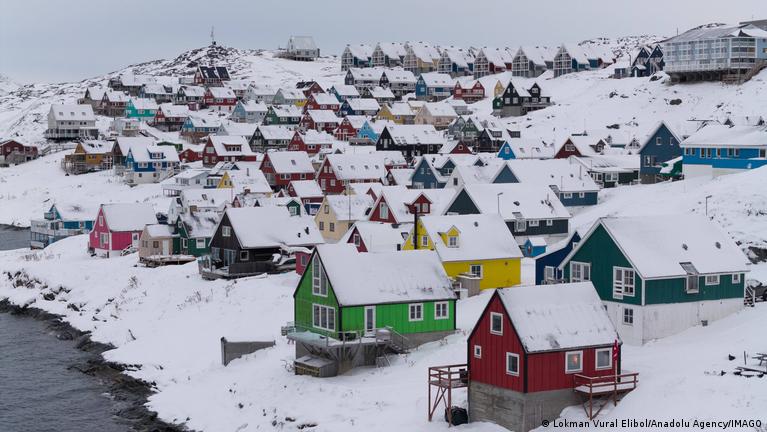
The Greenland ice sheet, one of the largest single masses of ice on Earth, has been undergoing a rapid transformation due to climate change. Scientists at the University of Colorado Boulder have been tracking the ice sheet's mass loss since 2013 and have found that it has reached unprecedented levels.
Mass Loss Accelerates in Recent Years
Between 2013 and 2022, the Greenland ice sheet lost a staggering 369 billion metric tons of ice, according to a recent study published in the journal Nature Reviews Earth Sciences. This represents a significant increase from the average annual mass loss of 250 billion metric tons recorded between 2003 and 2012.
The accelerated mass loss is attributed to warmer ocean temperatures and rising air temperatures, which are causing glaciers to melt at an unprecedented rate. The study's lead author, Dr. Jason Box, notes that the ice sheet's mass loss is not only affecting Greenland but also has significant implications for global sea levels.
Consequences of Ice Sheet Collapse
Scientists warn that the collapse of the Greenland ice sheet could have devastating consequences for global sea levels. If the entire ice sheet were to melt, it could raise global sea levels by up to 7.4 meters (24.3 feet). This would have a profound impact on coastal cities and low-lying areas, displacing millions of people and causing widespread flooding and damage.
Researchers also point out that the ice sheet's collapse would have significant economic and social implications, including the displacement of people, damage to infrastructure, and loss of ecosystems. The study's lead author, Dr. Box, emphasizes the need for urgent action to reduce greenhouse gas emissions and slow the rate of climate change.
International Response to Climate Change
The international community is taking steps to address the issue of climate change, including the reduction of greenhouse gas emissions and the development of renewable energy sources. The Paris Agreement, signed by 196 countries in 2015, aims to limit global warming to well below 2°C (3.6°F) above pre-industrial levels and pursue efforts to limit it to 1.5°C (2.7°F).
However, the agreement's effectiveness is still uncertain, and many countries are not meeting their emission reduction targets. The study's lead author, Dr. Box, emphasizes the need for immediate and sustained action to address the issue of climate change and slow the rate of the Greenland ice sheet's mass loss.
Researchers are also exploring new ways to monitor the ice sheet's mass loss, including the use of satellite data and machine learning algorithms. This research has the potential to improve our understanding of the ice sheet's dynamics and inform policy decisions on climate change mitigation and adaptation.
In conclusion, the Greenland ice sheet's mass loss is a pressing concern that requires immediate attention. The international community must work together to address the issue of climate change and slow the rate of the ice sheet's collapse. By reducing greenhouse gas emissions and transitioning to renewable energy sources, we can mitigate the worst effects of climate change and protect the world's most vulnerable communities.