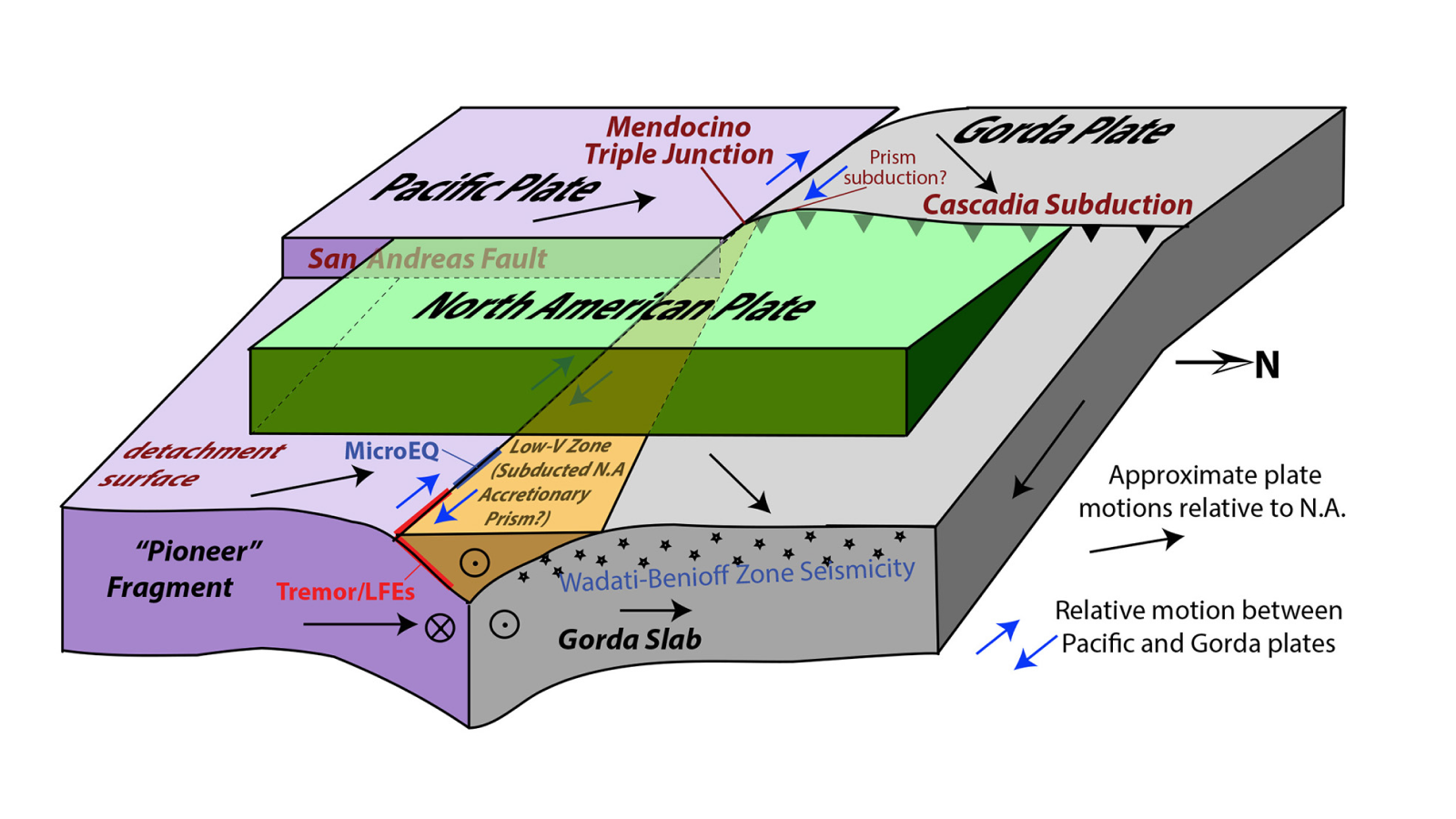
Scientists have made a groundbreaking discovery in the western United States, uncovering a fragment of a lost tectonic plate in the area where the San Andreas and Cascadia faults meet.
Historical Context: Formation of the Lost Plate
The San Andreas and Cascadia faults are two of the most active fault lines in the United States, with a long history of earthquakes and tectonic activity. The lost tectonic plate, known as the Farallon plate, was once a major force in shaping the western coast of North America.
However, millions of years ago, the Farallon plate was consumed by subduction, a process where one tectonic plate is forced beneath another. Scientists have long suspected that remnants of the Farallon plate might still exist, but the discovery of a fragment was not confirmed until now.
Discovery and Its Implications
The discovery was made by a team of researchers led by Dr. Sarah Jones, a geologist at the University of California, Berkeley. Using advanced seismic imaging techniques, the team was able to detect a fragment of the Farallon plate buried beneath the surface.
The fragment is estimated to be around 10 kilometers in diameter and is located about 20 kilometers beneath the Earth's surface. According to Dr. Jones, the discovery is a significant finding because it provides new insights into the geological history of the region.
The discovery also raises questions about the potential for future earthquakes in the area. "The presence of this fragment suggests that the tectonic activity in the region is more complex than previously thought," said Dr. Jones.
Research and Future Directions
The researchers plan to conduct further studies on the fragment, including taking core samples and conducting more advanced seismic imaging. The goal is to gain a better understanding of the geological processes that shaped the western coast of North America.
The discovery is also expected to have implications for earthquake hazard assessment and mitigation strategies. "By understanding the geological history of the region, we can better prepare for potential earthquakes and reduce the risk of damage and loss of life," said Dr. Jones.
The researchers are also exploring the potential for similar discoveries in other parts of the world, where tectonic plates have been consumed by subduction.
While the discovery is a significant finding, it also raises more questions than it answers. Further research is needed to fully understand the implications of this discovery and its potential impact on our understanding of the Earth's geological history.