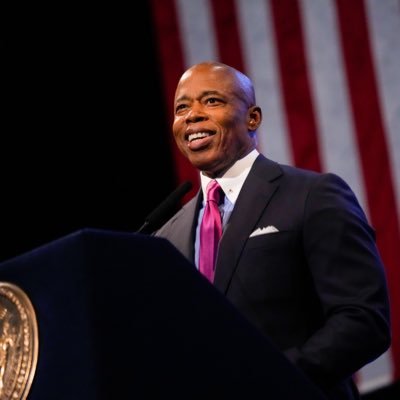
On January 1, 2022, Eric Adams took the oath of office as the new Mayor of New York City, succeeding Bill de Blasio. A lifelong New Yorker, Adams has built a reputation as a tough, no-nonsense politician with a deep understanding of the city's complexities. As the 110th Mayor, he faces numerous challenges, including the COVID-19 pandemic, economic recovery, and social justice reform.
The Early Life and Career of Eric Adams
Eric Adams was born on September 1, 1960, in Brooklyn, New York. Growing up in the Bedford-Stuyvesant neighborhood, he experienced firsthand the harsh realities of poverty and crime. After graduating from the Police Academy in 1984, Adams began his career as a police officer, rising through the ranks to become a captain. He later became a New York State Senator, serving from 2007 to 2013.
During his time in the state Senate, Adams focused on issues related to public safety, education, and economic development. He was a strong advocate for the NYPD and worked to improve community relations between law enforcement and the public.
Campaigning for Mayor
In 2021, Adams announced his candidacy for Mayor of New York City, running on a platform of public safety, economic growth, and social justice reform. His campaign emphasized the need for a more effective and responsive government, as well as a renewed focus on community policing and economic development.
Adams' campaign faced significant opposition from other Democratic candidates, including Maya Wiley and Kathryn Garcia. However, his strong leadership skills and commitment to public service ultimately won over many voters.
Mayor Adams' Agenda
As Mayor, Adams has set out to tackle some of the city's most pressing issues. He has proposed a comprehensive plan to address homelessness, including the creation of new affordable housing units and increased funding for social services.
Adams has also pledged to improve public transportation and reduce congestion in the city. He has proposed a new system of bus-only lanes and expanded bike-share programs to encourage sustainable transportation.
Additionally, Adams has emphasized the need for greater police accountability and community policing. He has proposed the creation of a new Civilian Review Board to investigate complaints against the NYPD.
Adams has also vowed to take on the city's opioid crisis, which has been exacerbated by the COVID-19 pandemic. He has proposed increased funding for addiction treatment and support services.
As Mayor, Adams will have to navigate complex relationships with city council members, community leaders, and stakeholders in the business and non-profit sectors. His ability to build coalitions and negotiate effectively will be crucial to his success.
Despite the challenges ahead, Adams is optimistic about the future of New York City. He believes that the city's diversity and resilience are its greatest strengths, and he is committed to harnessing those strengths to build a brighter future for all New Yorkers.
As the city moves forward under Mayor Adams' leadership, one thing is clear: the next chapter in New York City's history will be shaped by his vision, leadership, and commitment to public service.
Only time will tell whether Adams' agenda will succeed in addressing the city's complex problems, but one thing is certain – his tenure as Mayor will be marked by significant change and transformation.
As the city continues to evolve, New Yorkers will be watching closely to see how Mayor Adams navigates the challenges ahead and implements his vision for a safer, more prosperous, and more equitable city.
One thing is certain – Eric Adams is a leader who is not afraid to take on the tough issues and push for meaningful change.
As the 110th Mayor of New York City, Adams has the opportunity to leave a lasting legacy and shape the course of the city's history for generations to come.