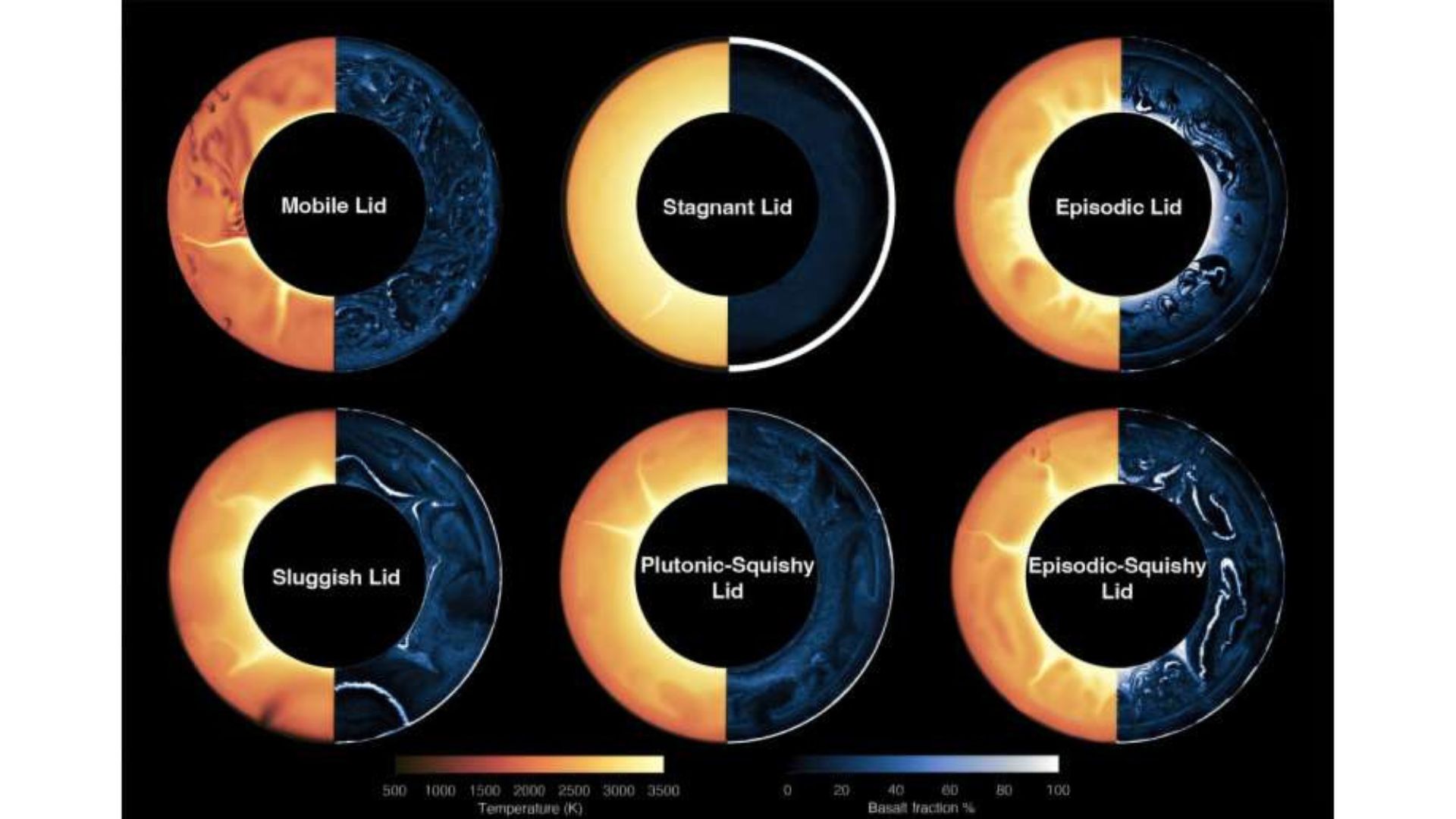
The search for habitable worlds has long been a priority in the field of astrobiology, with scientists scouring the galaxy for planets that could potentially support life. A recent study published in the journal Nature Geoscience has shed new light on this search, revealing that Earth's surface may be more dynamic than previously thought.
What is the Episodic-Squishy Lid?
The "episodic-squishy lid" refers to a unique phenomenon where the Earth's crust periodically moves, creating areas of crustal thinning and thickening. This process is thought to be responsible for the formation of the Earth's oceans and atmosphere, and may have played a crucial role in the development of life on our planet.
Researchers used computer simulations to model the Earth's crust and upper mantle, and found that the episodic-squishy lid was a key driver of the planet's geological activity. The study suggests that this phenomenon may be more widespread than previously thought, and could be a characteristic of other planets in the galaxy.
Implications for Habitable World Search
The discovery of the episodic-squishy lid has significant implications for the search for habitable worlds. Astrobiologists and planetary scientists may need to reevaluate their understanding of the conditions necessary for life to emerge on other planets.
For example, the study suggests that planets with a similar episodic-squishy lid may be more likely to have a dynamic atmosphere and liquid water, which are essential conditions for life. This could lead to a new generation of exoplanet hunting missions, seeking out planets with a similar geological history to our own.
However, the study also highlights the complexity of the search for habitable worlds. The episodic-squishy lid is just one of many factors that can influence the development of life on a planet, and scientists will need to consider a wide range of variables when searching for life beyond Earth.
Next Steps in Habitable World Search
The discovery of the episodic-squishy lid is just the latest development in the ongoing search for habitable worlds. Scientists are already working on new missions and technologies to explore the galaxy and search for signs of life.
One such mission is the James Webb Space Telescope, which is set to launch in 2023 and will be capable of detecting the biosignatures of life on distant planets. Another is the Europa Clipper mission, which will explore the icy moon of Jupiter and search for signs of life in its subsurface ocean.
As scientists continue to push the boundaries of our knowledge, we may one day discover that the search for habitable worlds is not just about finding a planet that can support life, but about understanding the complex processes that shaped our own planet and made life possible.
The discovery of the episodic-squishy lid is a reminder that the search for habitable worlds is a complex and ongoing process, and that there is still much to be learned about the conditions necessary for life to emerge on other planets.
As we continue to explore the galaxy and search for signs of life, we may uncover new and exciting discoveries that challenge our current understanding of the universe and our place within it.
The search for habitable worlds is a journey that has just begun, and one that will continue to captivate scientists and the public alike for generations to come.