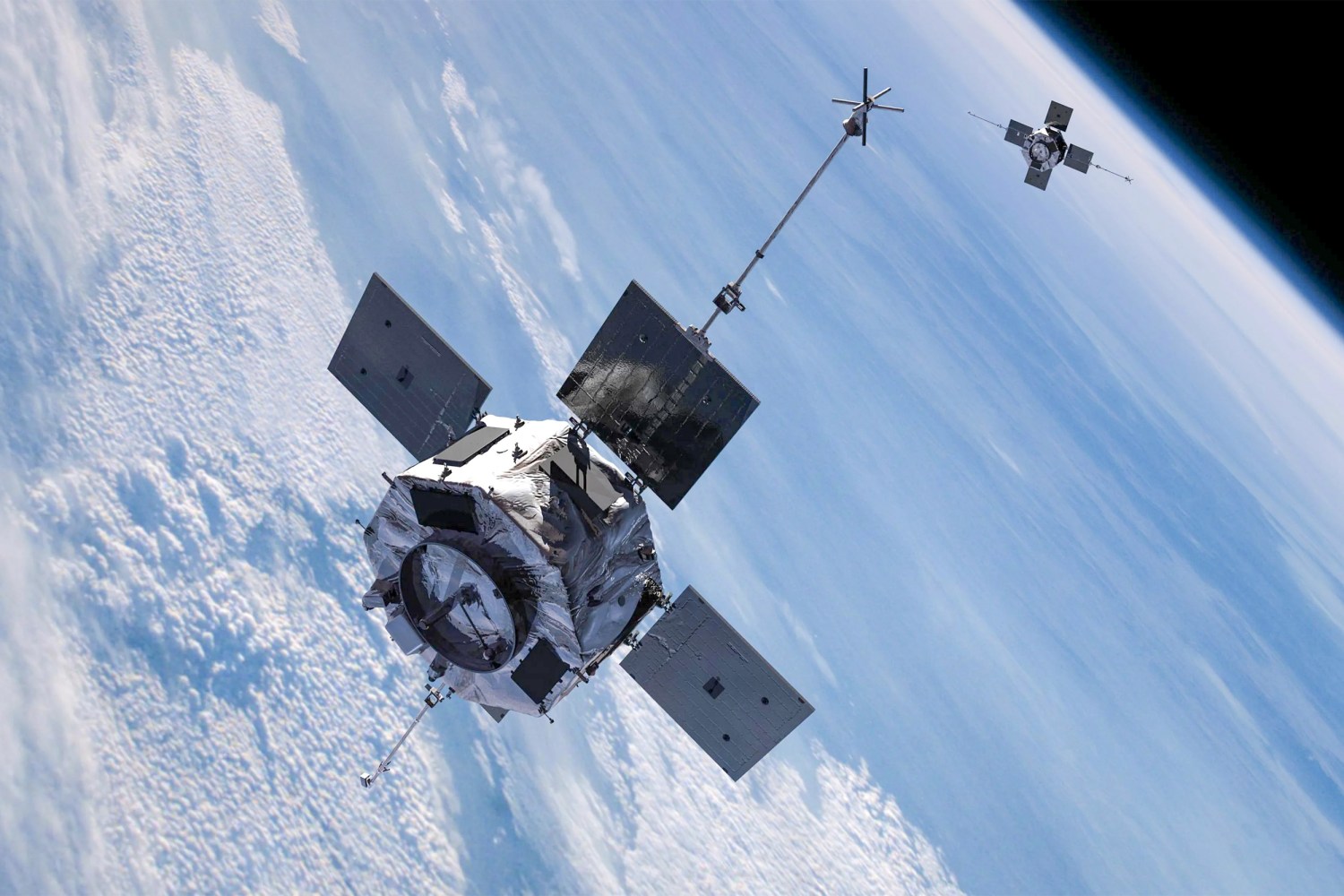
The National Aeronautics and Space Administration (NASA) has confirmed that a defunct satellite is on a collision course with Earth, sparking concerns about potential falling debris. The satellite, which was launched in 1990, is a 2-ton spacecraft that has been in a decaying orbit for years. According to NASA officials, the satellite is expected to re-enter Earth's atmosphere within the next few weeks, with a small risk of falling debris.
Risk of Debris Low
NASA officials have assured the public that the risk of debris hitting the ground is extremely low. The agency uses a complex system to track the trajectory of satellites and predict their re-entry into the atmosphere. While there is a possibility that some debris may survive re-entry and land on Earth, the chances of this occurring are extremely small.
The satellite's design and materials also suggest that it will break apart upon re-entry, reducing the risk of large debris pieces hitting the ground. NASA officials have noted that the satellite's re-entry will not pose a significant threat to human life or property.
History of the Satellite
The satellite, which was launched in 1990, was part of a series of spacecraft designed to study the Earth's upper atmosphere. The satellite was equipped with a range of instruments, including cameras, spectrometers, and magnetometers. During its operational life, the satellite provided valuable data on the Earth's upper atmosphere, including observations of the aurora borealis and solar flares.
However, the satellite's batteries failed in 1996, and it has since been in a decaying orbit. Despite efforts to repair or salvage the satellite, it has been largely inactive for over two decades.
Preparations and Response
NASA officials have been monitoring the satellite's re-entry trajectory for months, working with international partners to track its progress. The agency has also established a system to track and respond to any debris that may survive re-entry.
In the event of debris landing on Earth, NASA officials have assured the public that they will work closely with local authorities to ensure a safe and efficient response. The agency has also noted that it will provide regular updates on the satellite's re-entry trajectory and any potential debris that may pose a risk.
NASA officials have emphasized that the re-entry of the defunct satellite is a routine event and that the risk of debris hitting the ground is extremely low. The agency has also noted that it will continue to work with international partners to ensure the safe and responsible operation of satellites in Earth's orbit.